
How Did the Industrial Revolution Change the World? The Real Story Nobody Tells You
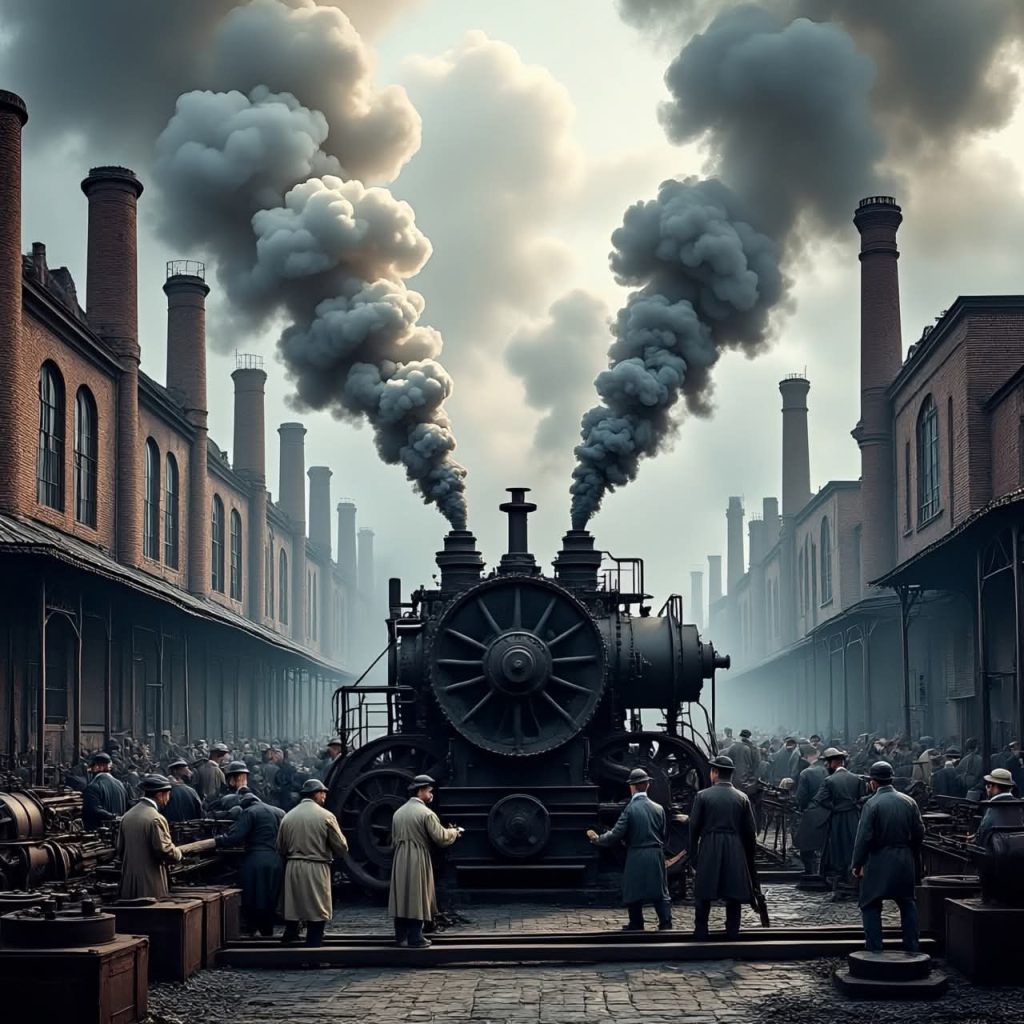
How Did the Industrial Revolution Change the World? Let Me Tell You a Story
The Industrial Revolution changed everything.
Before 1760 people worked by hand. After 1850 machines did the work.
In this article I will explain how the Industrial Revolution changed the world in 5 major ways and why it still matters in 2026.
You wake up to your phone alarm. You drink coffee from Brazil. You wear a t-shirt made in Bangladesh. You work on a computer. You talk to someone in America in 2 seconds.
What the heck happened in between?
That, my friend, is the Industrial Revolution. And honestly, it changed everything.
I used to think history was boring. Dates and names. But once I understood the Industrial Revolution, I realized this is why our life looks the way it does.
So let’s talk like real people. No fancy words. Just the truth about how did the Industrial Revolution change the world.
First, What Even Was the Industrial Revolution?
Look, it’s simple.
Before 1760, people made stuff with their hands. At home. Slow.
After 1850, people made stuff with machines. In factories. Fast.
That’s it. That’s the whole thing.
It started in England because they had coal and money. Then it spread everywhere.
There were basically 2 rounds.
Round 1: 1760 to 1840. Steam engines and textile mills. Making clothes faster.
Round 2: 1870 to 1914. Electricity and cars. Making everything faster.
1. ItCompletely Destroyed and Rebuilt How We Work
My grandfather was a farmer. My dad worked in an office. I work on a laptop.
See the jump? That started here.
Before: Everyone Was a Farmer
80 out of 100 people grew food. If you didn’t farm, you starved. Simple.
Want a shirt? Someone had to grow cotton, spin it, weave it, sew it. Took a month.
After: Everyone Got a Job
Machines came. One machine could do the work of 50 people.
So people left farms and went to cities to work in factories. For the first time, people worked for “wages”. 8 hours, then go home.
This was good because people made money.
This was bad because factories were hell. 14 hour days. Kids working. No breaks.
But this is where the 9 to 5 job was born. The job you probably have right now? Thank the Industrial Revolution.
2. ItEmptied Villages and Filled Up Cities
You know why you live in a city and not a village?
Because of this.
Before, cities were small. Most people lived in villages near farms.
Then factories opened in cities. And factories meant money. So everyone moved.
My great grandfather left his village and went to Dhaka for a mill job. Millions did the same.
This is called Urbanization.
Was it pretty? No. Cities were crowded. Dirty. Smelly. No clean water.
But cities also had schools, hospitals, and new ideas. So people kept coming.
Today more than half the world lives in cities. That trend started 250 years ago.
3. ItMade the World Tiny
Let me ask you something. How long would it take to send a letter to London in 1750?
6 months. By ship.
How long today? 2 seconds. By email.
The Industrial Revolution shrunk the world.
Here’s How
Steam Trains: Suddenly you could cross a country in a day, not a month.
Steam Ships: Suddenly you could trade with other continents cheap.
Telegraph: Suddenly news traveled in minutes.
Cars and Planes: Suddenly you could visit anywhere.
Because of this, a farmer in the US could sell wheat to someone in England. A factory in China could sell toys to someone in Brazil.
The world went from “my village” to “the whole planet”.
That’s why you can order anything online today. This all started with steam.
4. It Made Science About Money, Not Just Books
Before this, science was for rich people in universities. They studied stars.
After this, science was for making better machines. Because better machines meant more money.
So suddenly everyone wanted to invent things.
Light bulb. Telephone. Car. Airplane. All came in 50 years.
The rule became: See a problem in factory → Invent a solution → Make money → Invent more.
We’re still in that loop today. That’s why we have iPhones and AI.
The Industrial Revolution taught us that science should solve real problems.
5. It Changed What “Rich” Meant
Before 1760, if you had land, you were rich. Kings owned land.
After 1850, if you owned a factory, you were rich. Businessmen owned factories.
This created a whole new system called capitalism. Banks gave loans. People invested. Companies sold stocks.
Countries that built factories first became super rich and powerful. Like Britain, then America.
But it also created a huge gap. Factory owners got rich. Workers stayed poor.
That fight between rich and poor is still going on today.
Okay, But It Wasn’t All Good
I gotta be real with you.
The Industrial Revolution also messed some things up.
1. It polluted the air and water. We’re still dealing with that.
2. Kids worked in dangerous places. It took 100 years to stop that.
3. It killed a lot of traditional crafts. Handmade stuff died.
4. Rich countries went and took over poor countries for resources. That caused a lot of pain.
So it wasn’t a fairy tale. It was messy.
How the Industrial Revolution Created Modern Cities
You might think “this is old stuff”. But look around.
You work for a salary? That started in factories.
You live in a city? People moved there for factory jobs.
You buy cheap stuff from stores? Mass production started here.
You check the clock all day? Factories taught us to care about time.
You worry about pollution? Coal factories started it.
Even AI today is being called the “Fourth Industrial Revolution”. Because it’s changing jobs just like steam did.
History doesn’t repeat. But it rhymes.
How the Industrial Revolution Changed Technology
Here’s what I learned from studying this.
1. New tech kills old jobs but creates new ones. Don’t fear it. Learn it.
2. Growth is messy. We got rich, but we also got problems.
3. If you want opportunity, go where people are. Cities win.
4. The countries that adopt new tech first, win. That was Britain then. It’s someone with AI now.
5. Humans adapt. We hated factories at first. Now we love them. We’ll adapt to AI too.
The Bottom Line
So how did the Industrial Revolution change the world?
It took us from hand tools to machines.
From farms to factories.
From villages to cities.
From local to global.
It built the world you live in right now. The good parts and the bad parts.
Without it, you wouldn’t be reading this on a phone.
The world changed once with steam. And it’s changing again with AI.
The question is: what side of history do you want to be on?
FAQ
What is the Industrial Revolution in simple words
It’s when humans started using machines instead of hands to make things. Started around 1760.
When did it start
Around 1760 in England.
How did it change daily life
People moved to cities, got factory jobs, and started buying mass made products.
What are 3 inventions from it
Steam Engine, Light Bulb, and Telephone.
Was it good or bad
Both. It made us rich and advanced, but also caused pollution and inequality.
Are we still in an Industrial Revolution
The first one ended. But we’re in the Fourth one now with computers and AI.
Read more from Britannica: https://www.britannica.com/event/Industrial-Revolutionon
Read mire:https://worldhistorytales.com/what-is-gold-standard/


