
Cuban Missile Crisis: How Did The World Come Close To Nuclear War
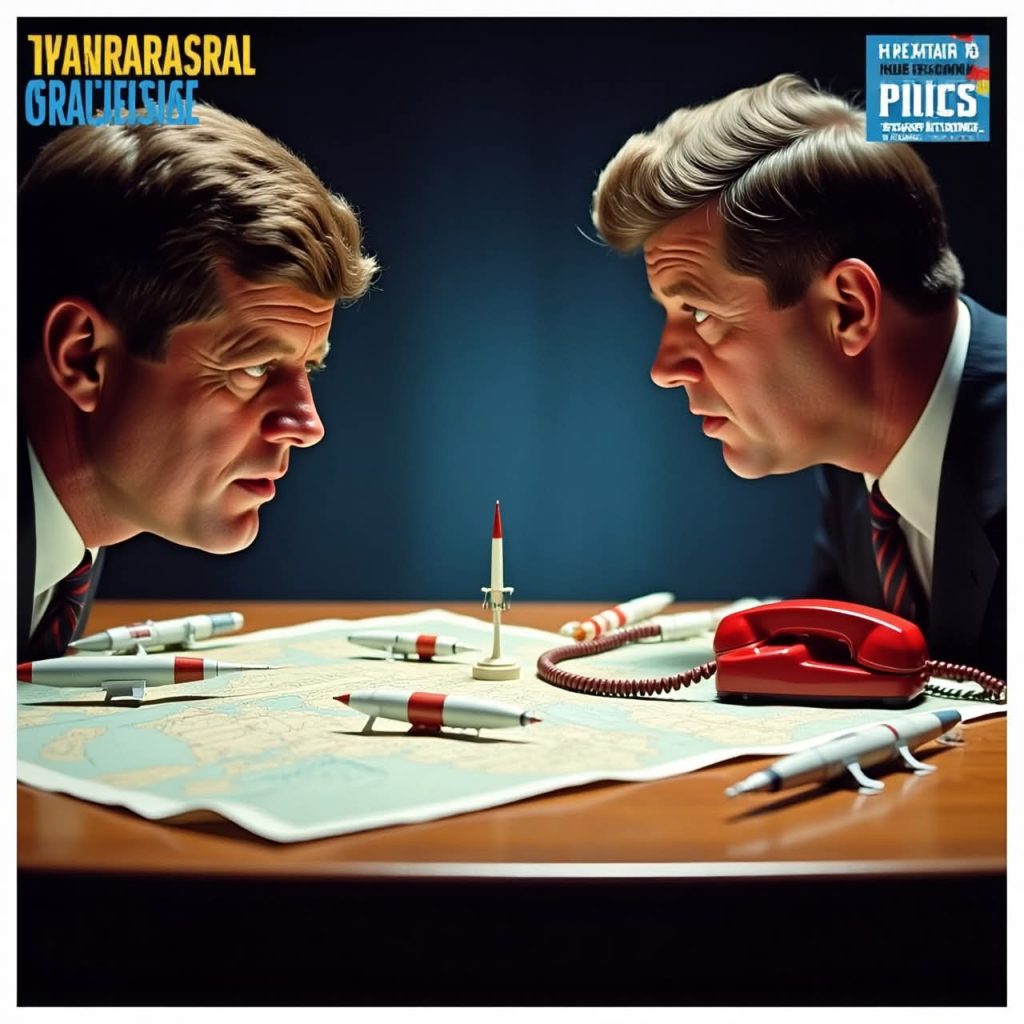
Cuban Missile Crisis: 13 Days That Almost Ended The World
Cuban Missile Crisis was the closest the world came to nuclear war.
October 1962. For 13 days, USA and USSR stood face to face.
In Moscow, Khrushchev had nuclear missiles.
In Washington, Kennedy had nuclear missiles.
Both had the button to end everything.
And in the middle: Cuba. Just 90 miles from Florida.
This was the Cuban Missile Crisis.
The closest humanity has ever come to nuclear war.
If one man said the wrong word.
If one submarine captain panicked.
We would not be here today.
Before The Crisis: Why Were Missiles In Cuba?
To understand the Cuban Missile Crisis, you need to go back 2 years.
1961: Bay Of Pigs Failed
CIA tried to invade Cuba to overthrow Fidel Castro.
1,400 Cuban exiles landed.
They failed in 3 days.
Castro was angry. He ran to USSR for help.
“Protect me from America.”
1961: USA Put Missiles In Turkey
JFK put 15 nuclear missiles in Turkey.
Right on USSR’s border.
Flight time to Moscow: 10 minutes.
Khrushchev said “This is not fair.”
So he thought: “If USA can put missiles near me,
I will put missiles near USA.”
Cuba was perfect.
90 miles from Miami.
Flight time to Washington: 5 minutes.
October 14, 1962: The Photos That Changed Everything
A US spy plane flew over Cuba.
U-2 plane. Very high.
The photos came back.
Analysts looked and froze.
Missile sites.
Big ones.
Nuclear ones.
SS-4 missiles. Range: 1,100 miles.
They could hit New York, Washington, Chicago.
Kennedy was shown the photos on October 16.
He said 3 words: “We have a problem.”
Cuban Missile Crisis: The 13 Days That Shook The World
From October 16 to October 28.
13 days. The world was on a timer.
Day 1-3: ExComm and Secret Meetings
Kennedy created a secret group. ExComm.
12 men. No leaks.
Option 1: Do nothing.
Option 2: Bomb Cuba.
Option 3: Naval “quarantine” – blockade.
Bombing meant war.
Doing nothing meant looking weak.
They chose Option 3. Blockade.
Kennedy called it “quarantine” because “blockade” is an act of war.
October 22: Kennedy went on TV.
8 PM. 60 million Americans watched.
“Secret missile sites have been found in Cuba.
We will quarantine Cuba.
Any missile launched from Cuba will be seen as attack by USSR.”
Day 4-7: Ships Head To Cuba
US Navy moved 180 ships.
Soviet ships were sailing toward Cuba.
October 24: “Quarantine” started.
World War 3 could start any minute.
In the White House, people were writing letters to their families.
They thought it was the last night.
Khrushchev sent a letter. Angry.
“USA is acting like pirates.”
Day 8-10: The Closest We Came
October 26.
Khrushchev sent another letter.
Softer this time.
“Remove missiles from Turkey and we remove from Cuba.”
But next day, October 27: “Black Saturday.”
3 things happened in 1 day.
1. U-2 Shot Down
A US spy plane was shot over Cuba.
Pilot died.
Generals told Kennedy: “Bomb them now.”
2. B-52s In The Air
US had nuclear bombers flying 24/7 near USSR.
Ready to drop.
3. Submarine Near Disaster
US Navy dropped “practice” depth charges on Soviet sub B-59.
Inside the sub, they thought war started.
They had a nuclear torpedo.
3 officers had to agree to launch.
2 said yes. 1 said no. Vasili Arkhipov.
He said no.
The world was saved by one man.
October 27 was the closest we came to nuclear war.
Day 11-13: The Deal
October 28.
Radio Moscow.
Khrushchev announced: “We will remove missiles from Cuba.”
Why?
Because of a secret deal.
Public deal: USSR removes missiles.
Secret deal: USA removes missiles from Turkey in 6 months.
Both leaders could claim victory.
Crisis ended.
October 28, 1962. 10 AM.
The world could breathe again.
Why Cuban Missile Crisis Changed The Modern World
The Cuban Missile Crisis lasted 13 days.
But it changed everything.
Change 1: Hotline Was Created
During the crisis, messages took 12 hours.
By telegram. By radio.
Leaders realized: “We need to talk faster.”
1963: Washington-Moscow Hotline installed.
Red phone. Direct line.
Still exists today.
Change 2: Nuclear Test Ban Treaty
August 1963.
USA, USSR, UK signed treaty.
No more nuclear tests in air, water, space.
Because both sides saw how close they came.
Change 3: No More “Eyeball To Eyeball”
After the crisis, both sides got scared.
No more putting missiles right next to each other.
Detente started.
Arms control talks started.
The world learned: Nuclear war has no winners.
Change 4: JFK Became Stronger
Before crisis: JFK looked weak after Bay of Pigs.
After crisis: He looked like a hero who avoided war.
This helped him later. But he was killed 1 year later.
The Human Side Of Cuban Missile Crisis
This was not just politics.
People were terrified.
In America
Schools did “duck and cover” drills.
People built bomb shelters in backyard.
Sold out: Canned food, water, batteries.
One woman wrote: “I kissed my kids goodnight.
I didn’t know if it was the last time.”
In Cuba
Cubans thought USA would invade.
Fidel Castro told USSR: “If attacked, use nuclear weapons.”
He wanted war. Khrushchev said no.
In USSR
Soviet soldiers in Cuba had the missiles.
Ready to launch.
Waiting for the order.
3 Lessons From Cuban Missile Crisis
1. Communication Saves Lives
The hotline, the letters, the backchannel talks.
Without them, someone would have fired.
2.Give The Enemy A Way Out
Kennedy let Khrushchev remove missiles “voluntarily.”
And took missiles out of Turkey secretly.
Both saved face. No one lost.
3.One Person Can Stop The End
Vasili Arkhipov on the submarine.
If he said yes, nuclear torpedo launches.
One “no” saved the world.
FAQ About Cuban Missile Crisis
1. What was the Cuban Missile Crisis?
The Cuban Missile Crisis was a 13-day confrontation in 1962 between USA and USSR over nuclear missiles in Cuba. It was the closest we came to nuclear war.
2. How did the Cuban Missile Crisis end?
USSR agreed to remove missiles from Cuba. In secret, USA agreed to remove missiles from Turkey 6 months later.
3. Why were there missiles in Cuba?
USSR put missiles in Cuba after USA put missiles in Turkey and after failed Bay of Pigs invasion.
4. How close did we come to nuclear war?
Very close. On October 27, 1962 a US plane was shot down and a Soviet submarine almost launched nuclear weapons.
5. What did we learn from the Cuban Missile Crisis?
We learned the need for direct communication, arms control, and that nuclear war must be avoided at all costs.
Reflecting on this story, I realize that war isn’t fought with guns alone. Sometimes, a single letter, a lie, or one person’s decision is enough to save the entire world.


