
The Significant Role Of Women In World War II
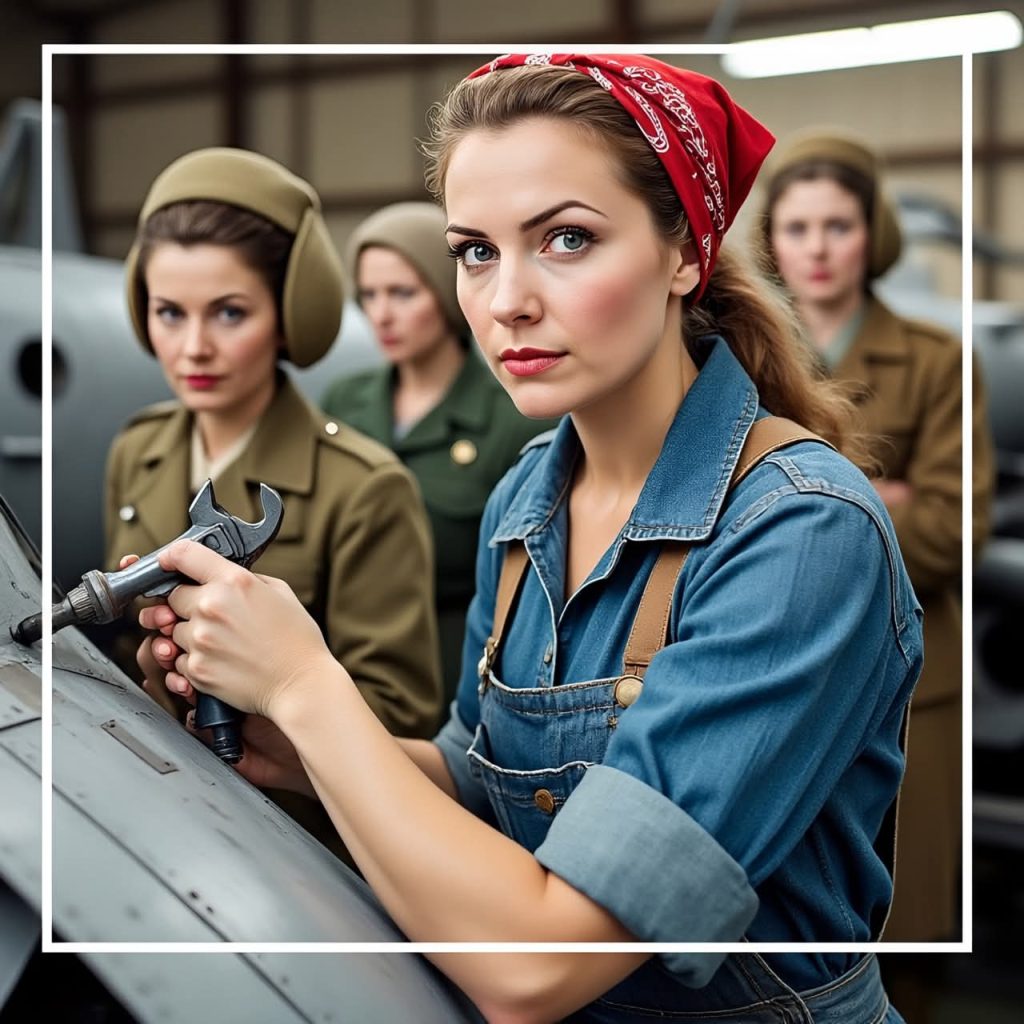
Women In WW2: How They Changed The War
Women in WW2 did not just stay home during World War 2.1941. The men went to war.
The factories went silent.
Who would build the tanks? Who would fly the planes?
Who would send the secret messages?
Women stepped in.
Women in WW2 did not just stay home and cook.
They built bombs. They flew planes. They cracked codes.
They fought on the front line. They led resistance groups.
Before 1939, most women stayed home.
By 1945, the world had changed forever.
This is the story that history books often forget.
The significant role of women in World War II.
The Factories: Rosie And Millions Like Her
America: “We Can Do It”
1942. Posters went up everywhere.
A woman in a bandana, flexing her arm.
“We Can Do It” – Rosie the Riveter.
6 million women went to work in factories.
They built B-24 bombers in 1 day.
They welded ships. They made bullets. They drove trucks.
Before the war, a woman working in a factory was “not proper.”
After the war, it was normal.
One woman said: “I made parts for planes that saved my brother.”
Another said: “The money let me buy my own house.”
Britain: The Land Girls
Food was short. So women went to farms.
They were called “Land Girls.”
2 lakh women worked on farms.
They milked cows. They drove tractors.
They worked 12 hours in rain.
“Feed the nation,” the government said.
Soviet Union: The Arsenal
USSR had it the hardest.
Men were dying at the front.
So women ran 80% of the factories.
They worked in -30 degree cold.
No gloves. No heat.
But tanks kept coming out.
Military And Battlefield Roles
Women in WW2 did not just work behind lines.
They picked up guns too.
How Women In WW2 Served In Military And Resistance
The Official Armies
USA: WAC and WAVES
400,000 American women joined.
WAC = Women’s Army Corps.
WAVES = Women in Navy.
They did not fight with guns.
They were pilots, nurses, radio operators, mechanics.
They freed up men to go fight.
The WASP pilots flew new planes from factories to bases.
122 of them died doing it.
They were not called “military” until 1977.
Britain: ATS and Wrens
300,000 British women joined.
They operated anti-aircraft guns.
They tracked German planes on radar.
One night in London, a woman gunner shot down a German bomber.
The newspaper wrote about her for weeks.
Soviet Union: The Fighting Women
This was different. Soviet women fought.
800,000 women in the Red Army.
The “Night Witches”: 588th Bomber Regiment.
All women pilots. They flew old planes at night.
German soldiers were terrified of them.
They would cut engines and glide. Silent. Then drop bombs.
Sniper Lyudmila Pavlichenko: 309 confirmed kills.
She came to America and said “I am 25 years old. I have killed 309 fascists.”
Nurses, tank drivers, machine gunners.
250,000 Soviet women died in the war.
Spies And Resistance Fighters
This is where women were the most dangerous.
France: The Resistance
Nancy Wake. Called “The White Mouse” by Nazis.
She killed a German soldier with her bare hands.
She led 7000 resistance fighters.
Josephine Baker. Singer.
She hid secret messages in her music sheets.
She smuggled them in her underwear.
Poland: The Warsaw Uprising
Teenage girls carried messages through sewers.
They bandaged soldiers. They threw grenades.
One girl, 14 years old, was a courier. She died.
SOE: Britain’s Secret Army
Special Operations Executive trained women as spies.
They parachuted into France.
Violette Szabo. Caught by Nazis. Tortured. Executed.
Noor Inayat Khan. Radio operator. Caught and shot.
Their job: 3 weeks average life expectancy.
They knew. They still went.
Impact Of Women In WW2 On Society After 1945
The war ended in 1945.
But women did not go back to the kitchen.
Change 1: Jobs Forever
Before WW2: 1 in 4 women worked.
After WW2: 1 in 3 women worked.
Factories saw “women can do this job.”
The government saw “we need women in crisis.”
The door was open. It never closed.
Change 2: New Rights
In many countries, women got the vote after WW2 because of their work.
France 1944. Italy 1946. Japan 1945.
Women said: “We built your planes. We buried your dead.
Now give us a voice.”
Change 3: The Family Changed
Women had their own money now.
They had driven trucks. Led teams.
Going back to “only housework” felt wrong.
This led to the 1960s women’s movement.
Rosie the Riveter became the symbol.
The Cost
It was not easy.
Women faced sexism. “Go home now, men need jobs.”
They were paid less.
Many lost husbands, brothers, sons.
But they also found something.
Independence. Skill. Pride.
One British woman wrote in her diary 1943:
“I never knew I was this strong.”
Women In WW2 From Other Countries
Germany
Women worked in factories too.
But Nazi idea was “Kinder, Kuche, Kirche” – Kids, Kitchen, Church.
Still, 500,000 women worked in anti-aircraft.
Japan
Women worked in factories and as nurses.
In 1945, school girls were trained to fight with bamboo spears.
China
Millions of women carried supplies on their backs.
The “Burma Road.”
They walked 100 miles to bring food to soldiers.
FAQ About Women In WW2
1. What was the role of women in WW2?
Women in WW2 worked in factories, joined military, served as nurses, pilots, spies and resistance fighters.
2. Did women fight in World War 2?
Yes. Soviet women fought as soldiers, snipers and pilots. Women in other countries served in support roles and resistance.
3. What is Rosie the Riveter?
Rosie the Riveter was the symbol of American women who worked in factories during WW2.
4. How did WW2 change women?
WW2 gave women jobs, independence, and rights. It changed how society saw women’s work forever.
5. How many women served in WW2?
Over 1 million women served in military worldwide. Millions more worked in factories and farms.
Read more:https://worldhistorytales.com/cold-war-division-usa-ussr/


