Why Did The Soviet Union Collapse: How USSR Fell In 1991
Why Did The Soviet Union Collapse: The Day The World Changed
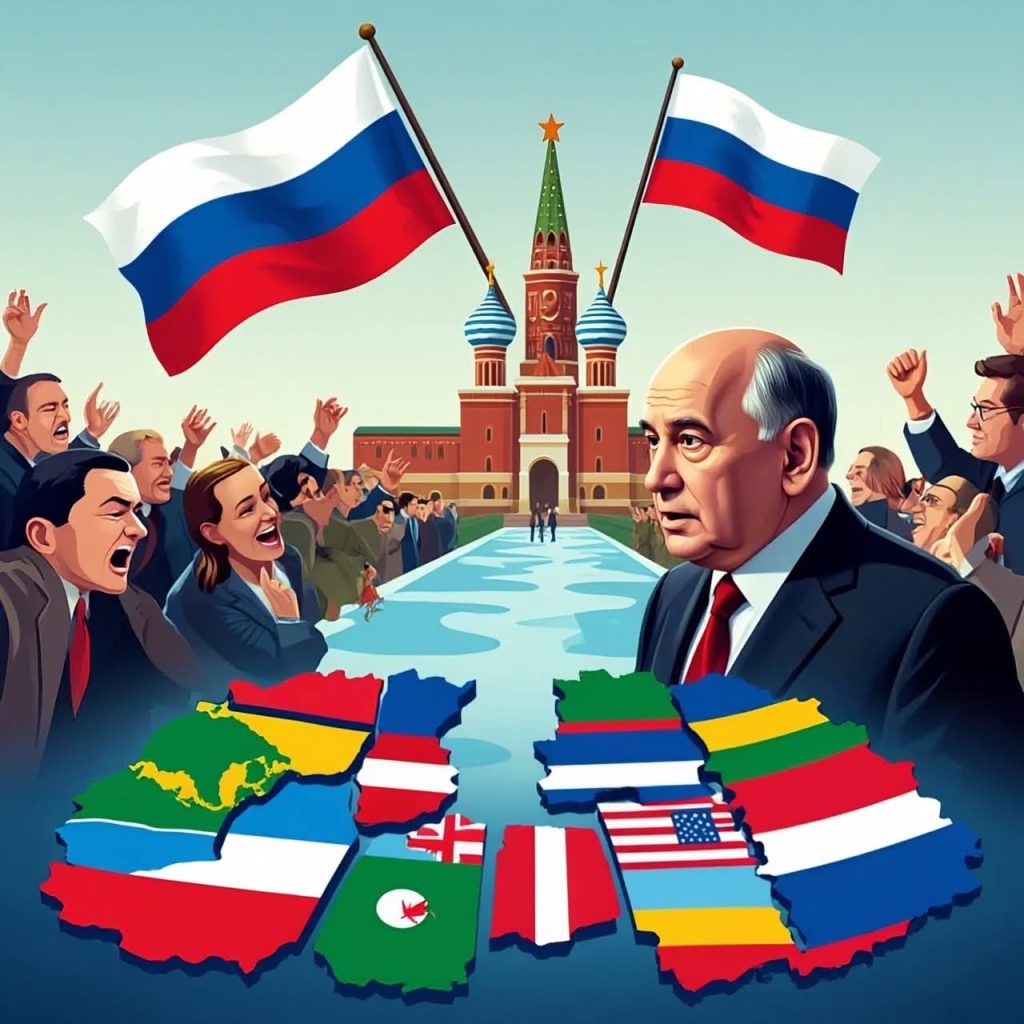
Soviet Union collapse happened on December 26, 1991.
On that day the red flag came down from the Kremlin.
After 69 years, the biggest country in the world was gone.
No war. No revolution.
15 countries became free overnight.
Cold War was over.
But how did a superpower with nuclear weapons fall apart?
This is the story of why the Soviet Union collapsed.
It was not one reason.
It was economy, war, freedom, and one man named Gorbachev.
Before The Collapse: USSR Was A Superpower
In 1980, USSR looked strong.
Big army. Nuclear weapons. Space program.
Controlled Eastern Europe.
But inside, it was rotten.
People waited 3 hours for bread.
Factories made bad products.
Everyone knew the system was not working.
By 1985, something had to change.
Soviet Union Collapse: The 6 Real Reasons
Historians agree on 6 main reasons.
Let’s go one by one.
Reason 1: Economic Problems And Stagnation
Communism failed at economics.
Problem 1: Central Planning
Moscow decided how many shoes, cars, bread to make.
But they always got it wrong.
Too many shoes, no bread. Too much bread, no shoes.
Problem 2: No Incentive
Worker got same salary whether he worked hard or slept.
So no one worked hard.
Problem 3: Oil Price Fell
In 1980s oil price crashed.
USSR sold oil to buy food.
When oil money stopped, economy collapsed.
By 1990, shelves were empty.
People had money but nothing to buy.
The economy was bleeding. And no one knew how to stop it.
Reason 2: Gorbachev And His Reforms
1985. Mikhail Gorbachev became leader.
He was young. 54 years old.
He said “We must change or we will die.”
He launched 2 big reforms:
1. Glasnost = Openness
“Talk freely. Criticize government. Press can write truth.”
People started talking about Stalin’s crimes.
About Chernobyl. About corruption.
Once people started talking, they stopped fearing.
2. Perestroika = Restructuring
“Let some private business. Fix factories.”
But it was too little, too late.
And it made things worse before better.
Gorbachev wanted to save communism.
But his reforms killed it.
Reason 3: Afghanistan War – USSR’s Vietnam
1979. USSR invaded Afghanistan.
They thought it would take 3 months.
It took 10 years.
1.5 million Afghans died.
15,000 Soviet soldiers died.
$50 billion wasted.
It was called “USSR’s Vietnam.”
Morale broke. Economy broke.
1989. USSR pulled out.
Defeated.
The world saw: USSR is not invincible.
Reason 4: Nationalism And Republics Breaking Away
USSR was not one country.
It was 15 republics. Russia, Ukraine, Kazakhstan, etc.
For 70 years Moscow controlled them.
But they never liked it.
When Gorbachev gave Glasnost, they said:
“If we can talk, we can leave.”
1990: Lithuania declared independence.
1991: Baltic states left.
August 1991: Failed coup in Moscow.
Hardliners tried to remove Gorbachev.
It failed. But it showed USSR was weak.
After the coup, everything fell apart.
One by one republics declared independence.
Ukraine voted 90% to leave.
Without Ukraine, USSR made no sense.
Reason 5: Chernobyl Disaster 1986
April 26, 1986. Nuclear plant exploded in Ukraine.
Worst nuclear disaster in history.
Gorbachev first lied. Then told truth.
Thanks to Glasnost.
But people saw 3 things:
1. Government lied to us
2. Government cannot handle crisis
3. Communism cannot even keep us safe
Chernobyl cost $235 billion.
And it killed trust in the government.
Reason 6: Pressure From USA And Cold War
Ronald Reagan. 1980s.
He said: “We will outspend USSR.”
USA built Star Wars. Missile defense.
More tanks. More bombs.
USSR tried to keep up.
But economy was already broken.
Reagan also supported rebels in Afghanistan.
Gave money to Solidarity in Poland.
Cold War pressure made USSR spend money it did not have.
It was like running a race with a broken leg.
By 1991, USSR was broke, tired, and alone.
What Happened After Soviet Union Collapse
December 8, 1991.
Leaders of Russia, Ukraine, Belarus met in secret.
They signed: “USSR is dissolved.”
December 25, 1991.
Gorbachev resigned on TV.
Next day USSR officially ended.
What happened next:
1.15 New Countries
Russia, Ukraine, Kazakhstan and 12 more.
Largest peaceful breakup in history.
2. Russia Became Poor
1990s. Inflation. Mafia. No jobs.
People sold everything to survive.
3. Cold War Ended
USA became only superpower.
World became “unipolar.”
4. Nuclear Weapons Scattered
3000 nuclear weapons in 4 countries.
Took 10 years to collect them all.
Why Soviet Union Collapse Still Matters Today
1991 was 35 years ago. But we still feel it.
Reason 1: Russia vs Ukraine
Putin said “USSR collapse was biggest tragedy.”
That’s why he invaded Ukraine in 2022.
He wants USSR back.
Reason 2: NATO Expansion
After USSR fell, 14 countries joined NATO.
Russia feels surrounded.
That tension is still here.
Reason 3: China Learned The Lesson
China saw USSR collapse.
They said: “Never give political freedom.”
That’s why China is rich but not democratic.
Reason 4: Nuclear Weapons
Many USSR nukes went to Russia.
Some to Kazakhstan, Ukraine, Belarus.
World is still dealing with that.
3 Big Lessons From Soviet Union Collapse
1. Economy Matters More Than Army
USSR had biggest army.
But empty stomachs brought it down.
2. Freedom Cannot Be Half Given
Gorbachev gave Glasnost but not democracy.
Once people taste freedom, they want all of it.
3. Empires Cannot Control Everyone Forever
15 republics, 100 ethnic groups.
You can hold them with fear.
But when fear goes, they leave.
FAQ About Soviet Union Collapse
1. When did the Soviet Union collapse?
The Soviet Union collapsed on December 26, 1991 when Gorbachev resigned and 15 republics became independent.
2. Why did the Soviet Union collapse?
The Soviet Union collapse happened due to 6 reasons: bad economy, Gorbachev reforms, Afghanistan war, nationalism, Chernobyl, and Cold War pressure.
3. Who was the leader when USSR collapsed?
Mikhail Gorbachev was the last leader of the Soviet Union. He resigned in December 1991.
4. What countries came from USSR?
15 countries: Russia, Ukraine, Kazakhstan, Uzbekistan and 11 others.
5. Did people want USSR to collapse?
Yes. By 1991 most people in republics voted to leave. They wanted freedom and better economy.
Read more:https://worldhistorytales.com/cuban-missile-crisis-nuclear-war/