History of TSMC: How Taiwan Built The Company That Runs The World
Intaroduction:History of TSMC: How Taiwan Built The Company That Runs The World
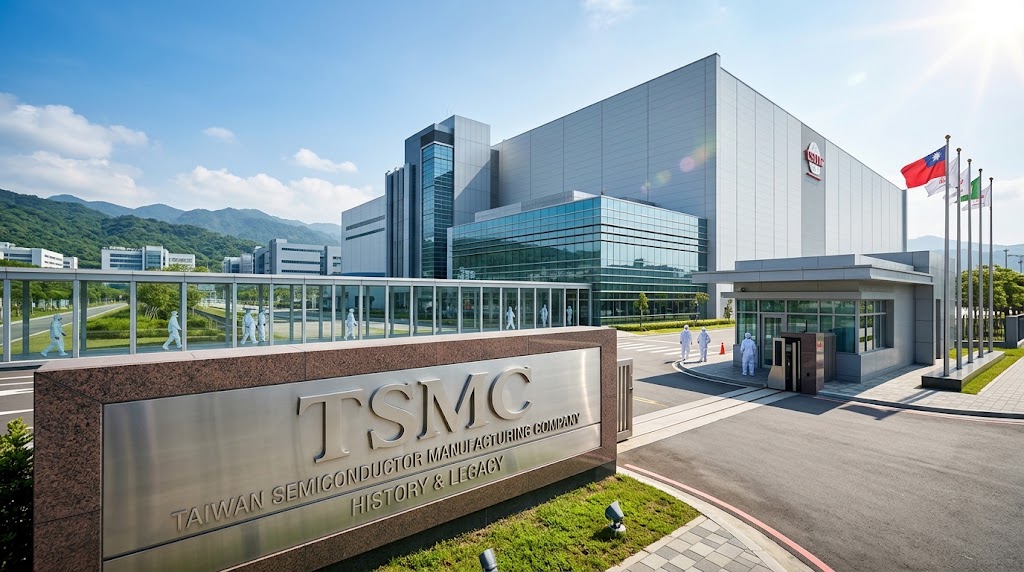
history of TSMC.
1987. A 56 year old man landed in Taiwan with one suitcase and a crazy idea.
His name was Morris Chang. He had just been forced to retire from Texas Instruments.
The Taiwanese government asked him: “Can you build a chip company for us?”
Everyone told him no. “Taiwan can never compete with Intel and Japan.”
37 years later that company is worth 500 billion dollars.
Every iPhone, every Nvidia AI chip, every AMD CPU comes from this one company.
This is the history of TSMC.
Chapter 1: Who Is Morris Chang and Why He Started History of TSMC
Forced Retirement Led To The Biggest Company
Morris Chang was born in Ningbo China in 1931. His family fled to Hong Kong during the war. Then to USA for college.
He joined Texas Instruments in 1958. Worked his way up for 25 years. Became President.
But in 1983 the board told him he was too old to be CEO. He was 55.
He was angry. He was also free.
In 1985 the Taiwanese government flew him to Taipei. “We want to build a semiconductor industry. Will you lead it?”
Chang had one condition. He would not make his own chips. He would only manufacture chips for other companies.
The government said yes. And on February 21 1987 TSMC was founded with 1.2 billion dollars.
Philips put in 200 million. Taiwan government put in 100 million. The rest came from investors.
This is how the history of TSMC started. With doubt, with debt, and with one man.
Chapter 2: 1987 to 1993 – The Struggle Years History of TSMC
Nobody Believed The Foundry Model
Before TSMC every chip company did 2 things. Design and manufacture.
Intel designed and made Intel chips. Samsung designed and made Samsung chips.
Chang said: “We will only manufacture. We will never compete with our customers.”
Investors laughed. “Why would Apple give their secret design to you?”
The first 6 years were hell.
TSMC lost money every quarter. The yield was only 30 percent. That means 70 percent of chips were trash.
Engineers worked 12 hour shifts. Morris Chang slept in the office.
But Chang had a rule. “Quality first. Then speed. Then cost.”
Slowly customers started to notice. The chips that came out of TSMC actually worked.
Chapter 3: 1994 to 2000 – The First Big Wins History of TSMC
Nvidia and The Birth of Fabless
In 1993 a small startup called Nvidia came to TSMC.
They had designed a graphics chip but had no factory to make it.
TSMC took the risk. They made the NV1 chip.
It was not a huge success. But it proved something. TSMC could deliver.
Word spread in Silicon Valley. “If you have a chip design but no factory, go to TSMC.”
This created a new business model called fabless. Companies that only design chips.
Qualcomm, Broadcom, Xilinx all became TSMC customers.
By 1997 TSMC had its first profitable year.
In 2000 TSMC did its IPO on the Taiwan Stock Exchange and NYSE. They raised 1.6 billion dollars.
The history of TSMC was now a real business.
Chapter 4: 2001 to 2010 – Apple Changes Everything
Building Fab After Fab
The 2000s were about scale. TSMC built Fab 12, Fab 14, Fab 15. Each one cost 5 billion dollars.
Each fab could produce 100 thousand wafers per month.
Then 2007 happened. Apple released the iPhone.
Apple did not have a chip factory. So they went to Samsung at first. But Samsung also made phones. Apple did not trust them.
In 2010 Apple knocked on TSMC’s door. “Can you make our A4 chip?”
TSMC said yes. And they delivered on time.
That one deal changed everything. Apple became TSMC’s biggest customer.
By 2010 TSMC was making chips for 90 percent of the fabless companies in the world.
Chapter 5: 2011 to 2016 – Beating Intel at Their Own Game
The 28nm and 16nm War
In 2011 the whole industry got stuck at 28nm. Transistors could not get any smaller.
Intel said they would solve it first. Samsung said the same.
TSMC solved it first. And they solved it with better yield.
Qualcomm moved all Snapdragon chips to TSMC. Nvidia moved all GPUs to TSMC.
Then came 16nm FinFET in 2015. This was a new transistor design.
Intel had it. Samsung had it. But TSMC’s version used less power.
Apple chose TSMC for the A9 chip in the iPhone 6s.
That was the moment Intel realized they had a problem.
A company in Taiwan was now better at manufacturing than Intel in USA.
Chapter 6: 2017 to 2020 – 7nm and 5nm Leadership
The AI and Smartphone Boom
2017 TSMC launched 7nm.
Apple used it for the A11 Bionic. Huawei used it for Kirin. AMD used it for Ryzen.
One year later TSMC launched 7nm Plus with EUV. This was the first time EUV light was used in mass production.
Then 2020 came. 5nm.
Apple A14. Apple M1. All made by TSMC.
Intel was still stuck at 10nm.
Samsung announced 5nm but their yield was bad.
By 2020 TSMC had 54 percent of the global foundry market. Samsung had 17 percent. Everyone else was small.
The history of TSMC had become the history of modern technology.
Chapter 7: 2020 to 2023 – COVID, Chip Shortage and Geopolitics
The World Finally Noticed History of TSMC
2020 COVID hit. Everyone bought laptops, PS5, cars.
But cars could not be built. Why? No chips from TSMC.
Suddenly presidents and prime ministers were calling Taiwan.
USA said: “Build a fab in Arizona. We will pay you.”
Japan said: “Build in Kumamoto. We will pay you.”
Germany said: “Build in Dresden. We will pay you.”
TSMC agreed to all of them.
At the same time US and China tensions grew. 70 percent of advanced chips were made in Taiwan. 100 miles from China.
The history of TSMC was no longer just business. It was national security.
Chapter 8: 2021 to 2024 – 3nm and The Future
The Most Advanced Chips on Earth
In 2022 TSMC started mass production of 3nm.
Apple A17 Pro. Apple M3. All 3nm.
Each 3nm chip has 25 billion transistors.
To make it TSMC uses ASML’s 400 million dollar EUV machines. There are only 200 of them in the world.
TSMC spends 30 billion dollars per year on research.
They are already testing 2nm in the lab. It will launch in 2025.
No other company is even close.
Chapter 9: The People Behind History of TSMC
70,000 Engineers
TSMC employees work hard. 12 hour shifts. Clean room suits. No dust allowed.
But the pay is good. A senior engineer in Taiwan makes 100 thousand dollars.
Morris Chang retired in 2018 at age 86. He said his job was done.
New CEO is CC Wei. He started as an engineer in 1998.
New Chairman is Mark Liu.
The culture is still the same. Customer first. Quality first. No politics.
Chapter 10:History of TSMC Factories Around The World
Leaving Taiwan
For 35 years all advanced chips were made in Taiwan.
That is changing.
Arizona USA: 40 billion dollar investment. 2 fabs. Making 4nm and 3nm by 2026.
Kumamoto Japan: 7 billion dollars. Making 28nm and 16nm for car companies.
Dresden Germany: 10 billion dollars. Making chips for European cars.
By 2030, 30 percent of TSMC production will be outside Taiwan.
This is the biggest change in the history of TSMC.
Chapter 11: TSMC vs Competitors
Why History of TSMC Wins
TSMC vs Intel: Intel only makes Intel chips. TSMC makes chips for everyone. Customers trust TSMC more.
TSMC vs Samsung: Samsung has similar technology but their yield is 20 percent lower. That means higher cost.
TSMC vs China: China is 10 years behind. The US banned ASML from selling EUV machines to China.
So for now TSMC has no real competitor.
Chapter 12: The Money and The Numbers
How Big Is History of TSMC
Founded: 1987
Headquarters: Hsinchu Taiwan
Employees: 70,000
Revenue 2023: 69 billion dollars
Market Cap: 500 billion dollars
Profit Margin: 58 percent
R and D Spend: 30 billion per year
TSMC makes more profit than Intel and Samsung combined.
Chapter 13: Problems and Risks
What Could Go Wrong
1. Taiwan Risk
70 percent of advanced chips are made in Taiwan. If there is a war, the global economy stops.
2. Cost
A 2nm factory costs 25 billion dollars. Only 3 companies in the world can afford that.
3. Talent
Taiwan does not have enough engineers for Arizona and Japan. TSMC is training Americans and Japanese.
4. Customers
Apple is 25 percent of TSMC revenue. If Apple leaves, TSMC has a big problem.
Chapter 14: 10 Facts About History of TSMC
1. Morris Chang was 56 when he started TSMC
2. First customer was Nvidia in 1994
3. Apple became customer in 2010
4. TSMC invented the foundry business model
5. TSMC spends more on R and D than Intel
6. One ASML machine costs 400 million dollars
7. TSMC has 60 percent market share
8. TSMC built the first 7nm and 5nm and 3nm chips
9. Morris Chang retired at age 86
10. TSMC uses 10 million gallons of water per day
Chapter 15: Why The History of TSMC Matters To You
Your Phone, Your Car, Your Life
iPhone: TSMC chip
Nvidia RTX 4090: TSMC chip
PlayStation 5: TSMC chip
Tesla Autopilot: TSMC chip
ChatGPT servers: TSMC chips
If TSMC stops for one month, the world loses 1 trillion dollars.
That is why USA, China, EU all care about Taiwan.
Understanding the history of TSMC means understanding power in 2024.
Chapter 16: Final Thoughts – One Company That Runs The World History of TSMC
From Sand to 500 Billion
In 1987 people said Taiwan could not do it.
In 2024 Taiwan makes 90 percent of the world’s advanced chips.
Morris Chang took a risk. He focused on one thing and did it better than anyone.
The history of TSMC teaches us 3 lessons.
1. Focus beats everything. TSMC only manufactures.
2. Trust is everything. TSMC never competes with customers.
3. Execution is everything. TSMC delivers on time, every time.
Next time you hold your phone, remember.
Inside is a piece of silicon made in Taiwan by 70 thousand people.
That is the history of TSMC. And it is still being written.
Frequently Asked Questions History of TSMC
1. What does TSMC stand for
Taiwan Semiconductor Manufacturing Company
2. Who founded TSMC and when
Morris Chang founded TSMC in 1987
3. Why is TSMC so important
TSMC makes 60 percent of the world’s chips including Apple and Nvidia chips
4. Where are TSMC factories located
Mainly Taiwan. Also building in USA, Japan and Germany
5. How big is TSMC
500 billion dollar market cap and 70 thousand employees
6. What is TSMC’s technology lead
TSMC is 1 to 2 years ahead of Samsung and Intel in chip manufacturing
7. What is the future of TSMC
2nm in 2025 and 1.4nm in 2027