
The East India Company’s Trade: How Did an Ordinary Trading Company Rule the Entire Subcontinent
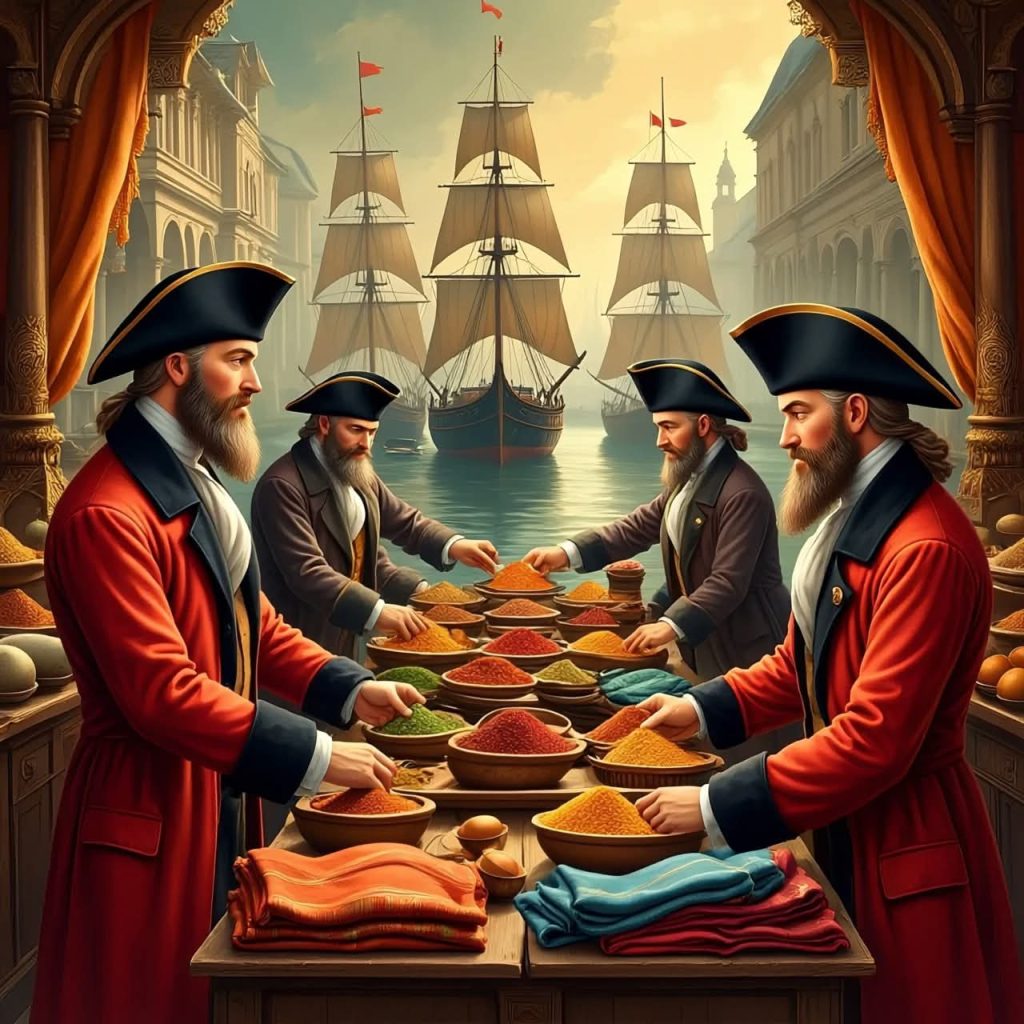
1. Introduction: How Did a Tea Trading Company End Up Ruling 250 Million People
When I first heard the name East India Company in school, I thought it was just a company that sold tea and spices. Like Starbucks but 400 years ago.
Then my teacher dropped the bomb. “This company had its own army. Bigger than the British army. And it ruled all of India for 100 years.”
I was 14 and I didn’t believe it. How can a trading company rule an entire subcontinent?
That question haunted me. And after 3 weeks of research, here’s the crazy true story of The John Company . How a group of London merchants became kings, generals, and tax collectors. How trade turned into an empire.
British Library East India Company Archives
2. What Was The The John Company
Before we go into the drama, let’s get the basics right.
It Started As Just Business
The The John Company was founded on December 31, 1600. A group of London merchants got a “Royal Charter” from Queen Elizabeth I.
Their job was simple. Trade with Asia. Bring back spices, silk, tea, and cotton. Make profit.
That’s it. No one mentioned ruling countries.
But They Got Something Dangerous: A Monopoly
The Queen gave the The John Company exclusive rights to trade with all countries east of the Cape of Good Hope.
No other English company could compete.
This monopoly is what gave the East India Company so much money and power later.
National Archives UK East India Records
3. 1600s: The East India Company Just Wanted To Sell Spices
For the first 100 years, the East India Company was boring. In a good way.
First Factory in Surat, 1612
They came to India and asked the Mughal Emperor Jahangir for permission to trade. He said yes.
They set up a small “factory” in Surat. Not a factory like today. It was a trading post with warehouses.
The Big 3 Products
1. Spices from Indonesia
2. Cotton and silk from India
3. Tea from China
The The John Company ships would go to India, buy cheap, and sell expensive in London. That’s all.
4. The Big Mistake: Giving The East India Company An Army
This is where everything changed.
European Wars Came To India
In the 1700s, Britain and France were fighting everywhere. Including India.
Both the British trading company and the French East India Company started hiring Indian soldiers called “Sepoys” to protect their factories.
The Company Realized Something
“Wait. If we have soldiers, we can protect our trade. And if we can protect trade, maybe we can control the rulers who tax our trade.”
That one thought changed history. The British trading company stopped being just traders.
5. 1757: The Battle of Plassey – When The East India Company Became Rulers
This is the day The British trading company stopped being a company and became an empire.
Robert Clive and 3,000 Men vs 50,000
Robert Clive was a clerk who became a general. He led 3,000 East India Company soldiers against Siraj-ud-Daulah, the Nawab of Bengal who had 50,000 men.
How Did They Win
Clive bribed one of the Nawab’s generals, Mir Jafar. On the day of battle, half the Nawab’s army just stood there and watched.
After Plassey, the British trading company basically owned Bengal. The richest province in India.
This was the moment. Trade was over. Rule had begun.
6. How The East India Company Made Money: It Wasn’t Just Trade Anymore
After 1757, the British trading company found a much better way to make money than selling tea.
Tax Collection
The Mughal Emperor gave the English trading giant the “Diwani” rights in 1765. That meant the right to collect taxes in Bengal, Bihar, and Orissa.
Think about that. A company was now collecting taxes from 20 million people.
The Money Flow
Step 1: Collect taxes from Indian farmers
Step 2: Use that money to buy Indian goods
Step 3: Ship those goods to England and sell for profit
The English trading giant didn’t need to bring money from England anymore. They used Indian money to conquer more of India.
7. The merchant company of London: Bigger Than The British Army
By 1800, The merchant company of London had a problem. It was too big.
260,000 Soldiers
The merchant company of London army had 260,000 Indian soldiers and 24,000 British officers.
The British army back in England only had 40,000 soldiers.
The British merchant empire was literally bigger than the country that owned it.
How They Conquered Everything
They used a policy called “Subsidiary Alliance”. Tell Indian kings: “We will protect you. Just pay us and let us keep soldiers in your kingdom.”
One by one, India’s kingdoms signed it. Within 50 years, the East India Company controlled 2/3 of India.
8. The Dark Side of East India Company Trade
This is where the story gets ugly. Because The British merchant empire was not just trading.
The Bengal Famine of 1770
After the British merchant empire took over Bengal, they increased taxes to pay for their army.
Then a famine hit. 10 million people died.
The powerful British corporation kept exporting rice and grain to England during the famine.
Forced Opium Trade
When the Chinese didn’t want to buy British stuff, The powerful British corporation sold them opium from India instead. This led to the Opium Wars.
Trade became exploitation.
9. How Did The British Government Allow This
You’re probably thinking: “Why didn’t the King stop them?”
The East India Company Was Too Powerful
The powerful British corporation was lobbying Parliament in London. They had shareholders that included members of Parliament.
The Regulating Act of 1773
Finally, the British government said “Okay this is getting out of hand.” They passed a law to control the East India Company.
But it was too late. The company already ruled India.
10. The East India Company and Indian Culture
It wasn’t all guns and taxes. The East India Company also changed India in other ways.
They Built Railways and Telegraphs
To move goods faster, the East India Company built India’s first railways in 1853.
They Learned Indian Languages
Early the colonial trading empire officers studied Sanskrit, Persian, and Urdu. They translated Indian books.
But all of this was to rule better, not to help.
11. The Rebellion of 1857: When India Fought Back
After 250 years, Indians had enough.
The Sepoy Mutiny
It started because of a rumor. New rifle cartridges were greased with cow and pig fat. Hindus and Muslims in the colonial trading empire army refused to use them.
The Result
The rebellion failed. But it scared the British government so much that they said “We can’t let a company run a country anymore.”
12. 1858: The End of The East India Company
Queen Victoria made a proclamation.
“The British Government will now directly rule India.”
The colonial trading empire was dissolved. All its land, army, and power was taken by the British Crown.
After 258 years, the East India Company was gone. But British rule in India would continue for another 90 years.
13. Why The East India Company Story Matters Today
This isn’t just old history.
It Was The First Mega Corporation
The John Company was like Amazon + Blackwater + The Government. All in one.
It Shows How Money Becomes Power
The John Company started with trade. But with enough money, they bought armies, politicians, and kingdoms.
14. 5 Crazy Facts About The John Company You Didn’t Know
1. They had their own flag – It looked like the US flag and might have inspired it.
2. They printed their own money – The John Company coins were used all over India.
3. They owned tea – The Boston Tea Party happened because of The John Company tea taxes.
4. They banned Indian textiles – To protect British factories, they made Indians pay huge taxes on their own cloth.
5. One of their employees founded Hong Kong – Sir James Matheson made billions from The John Company opium trade.
15. Lessons From The merchant company of London
What can we learn?
When Business and Government Mix, It Gets Dangerous
The merchant company of London had no one to answer to. That’s why it became so corrupt.
Trade Can Build Empires
The merchant company of London proves that trade is more powerful than war. Because they conquered India with accounting books, not just guns.
16. Final Thoughts: An Ordinary Company That Became Extraordinary
The merchant company of London started in a coffee shop in London with 218 merchants.
200 years later, it was ruling 250 million people. It had an army, a navy, and made its own laws.
The colonial trading empire shows how greed, opportunity, and a little bit of gunpowder can turn traders into emperors.
And that’s why we still talk about the East India Company today.
Frequently Asked Questions
What was The colonial trading empire
The colonial trading empire was a British trading company founded in 1600 that eventually ruled most of India until 1858.
How did the East India Company rule India
The colonial trading empire started with trade, then got an army, collected taxes, and defeated Indian kings in battles like Plassey.
When did the East India Company end
The East India Company was dissolved in 1858 after the Indian Rebellion of 1857 and the British government took direct control.
What did the East India Company trade
The East India Company traded spices, cotton, silk, tea, and later opium between Asia and Europe.
Was the East India Company owned by the British government
No. The East India Company was a private company with a royal charter, but the British government took control of India from it in 1858.


