
Did The Trojan War Really Happen? The Truth Behind Troy and Helen
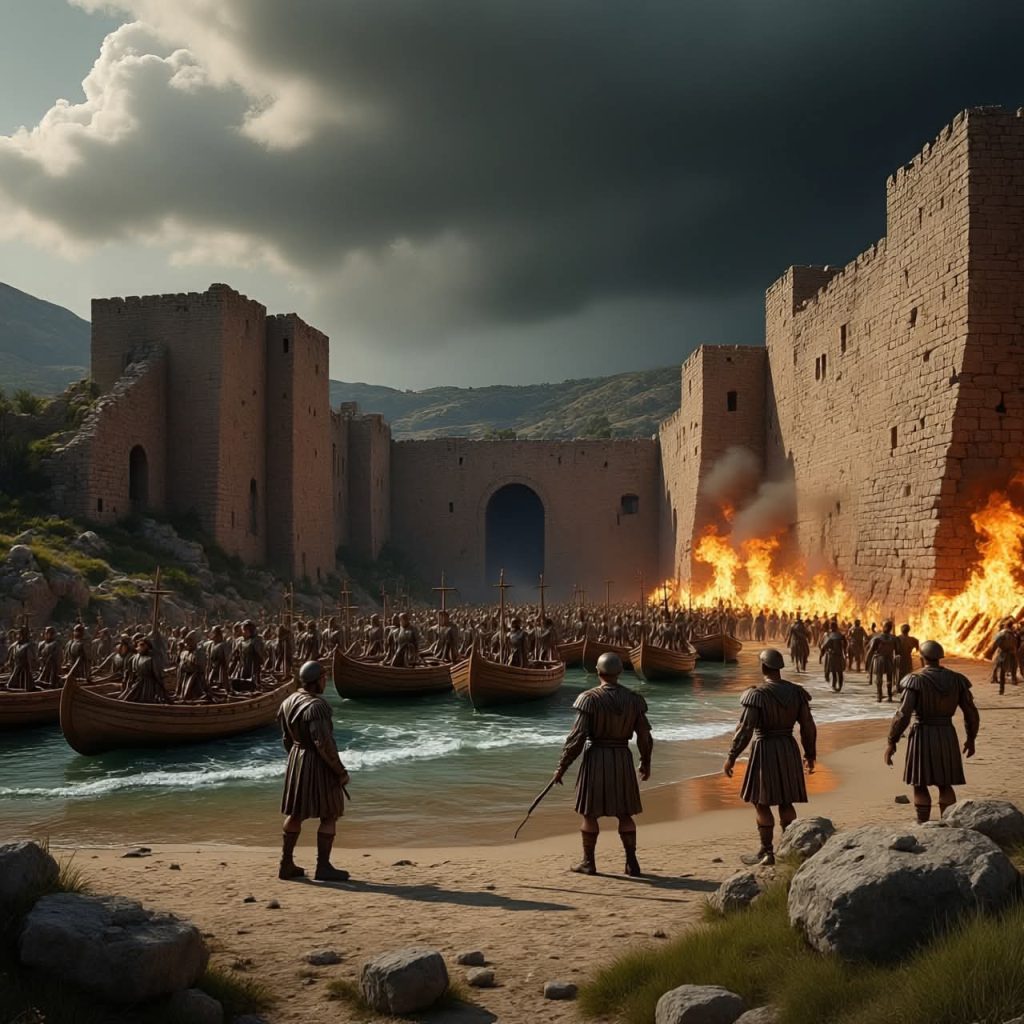
Did the trojan war really happen: The Story Everyone Knows
Did the trojan war really happen. Did the trojan war really happen.
I’ll be straight with you. When I first googled this, I thought I’d get a 2-sentence answer. Yes or No.
Three hours later I was still reading. Because thi s one question leads you down a rabbit hole of gods, kings, a wooden horse, and a city buried for 3000 years.
So today I’m breaking it all down for you. No academic jargon. Just story, science, and proof. By the end, you’ll decide for yourself: did the trojan war really happen?
Helen, Paris, and The Spark
The story starts with Sparta’s king, Menelaus. His wife was Helen. And she was said to be the most beautiful woman in the world.
One day, Prince Paris of Troy visited Sparta. He saw Helen. And he took her back to Troy with him.
Some sources say she was kidnapped. Others say she went willingly. Either way, Menelaus lost his mind.
He called his brother Agamemnon. Agamemnon was the most powerful king in Greece. He called in favors from every king he knew. They gathered 1000 ships. And they sailed to Troy to get her back.
TenYars of War
The Greeks arrived at Troy and hit a wall. A massive, impossible wall.
So they camped outside for 10 years. Ten years.
During that time we got all the big names. Achilles, the strongest Greek warrior. Hector, Troy’s best defender. Odysseus, the smartest man alive.
Thousands died. Cities were burned. And still Troy didn’t fall.
The Trojan Horse
After a decade, Odysseus had an idea. Build a giant wooden horse. Hide soldiers inside it.
The Greeks pretended to sail away and left the horse as a “gift to the gods”. The Trojans dragged it inside their city, celebrating their victory.
That night, the soldiers climbed out. They opened the gates. The rest of the Greek army sailed back. Troy burned. The war was over.
It’s a beautiful story. But here’s the real question: did the trojan war really happen or did Homer just make it up?
Did the trojan war really happen: What People Believed For 2000 Years
For 2000 years, the answer was simple.
“It’s Just A Myth”
From the Romans to the 1800s, historians and scholars all agreed. The Trojan War was a myth.
There was zero proof. No city called Troy had ever been found. No records of Helen. No mention of a 10-year war.
In textbooks, the Trojan War was listed under “Mythology” right next to Zeus and Hercules.
The general belief was: Homer was a poet. He made up a good story to entertain people around campfires 2800 years ago.
So for 2000 years, if you asked “did the trojan war really happen”, scholars would laugh and say no.
Did the trojan war really happen: The Man Who Dug Up Troy in 1870
Then came Heinrich Schliemann. And he changed everything.
A Businessman Obsessed With Homer
He was a German businessman. Rich. And obsessed.
He grew up reading the Iliad and believed every single word of it.
Everyone called him crazy. “Troy isn’t real,” they said.
He said: “Watch me.”
Finding Hisarlik
Schliemann went to northwest Turkey. To a hill called Hisarlik. Locals said it was just a mound of dirt.
He started digging in 1870 with hundreds of workers and shovels.
And 3 meters down, he found walls. Pottery. Gold. A whole city.
He shouted “I have found the treasure of King Priam!”
But he didn’t just find one city. He found 9 cities, built on top of each other. Because people kept rebuilding Troy for 3000 years.
Suddenly, the answer to did the trojan war really happen got a lot more complicated.
Did the trojan war really happen: Archaeology Proof From Troy VIIa
Okay, so we found Troy. But was it the Troy from the war?
Here’s what archaeologists found in Troy VI and Troy VIIa. These layers match the time period of the war, around 1300-1200 BC.
Burned Walls and Skeletons
Troy VIIa shows clear signs of war. Burned buildings. Skeletons in the streets. Arrowheads stuck in walls.
This city was attacked and destroyed suddenly. Not slowly over time.
That matches Homer’s story of a siege.
The City Was Huge
Before Schliemann, people thought Troy was a small village. But digs in the 1990s showed Troy was massive. 30 hectares. Room for 10,000 people.
It also had a lower city outside the walls. Exactly like Homer described.
So Troy was real. And it was important enough to fight a war over.
But Where’s The Trojan Horse
Here’s the catch. No wooden horse. No Helen’s jewelry with her name on it.
Archaeology can prove there was a war. It can’t prove the details of the story.
Did the trojan war really happen: Other Ancient Records Say Yes
This is where it gets wild. Because other ancient civilizations also wrote about this time.
The Hittite Tablets
The Hittites were a powerful empire near Troy. In their archives, archaeologists found letters mentioning a place called “Wilusa”.
Linguists say Wilusa = Ilios = Troy.
These letters talk about conflicts between Wilusa and a group called “Ahhiyawa”.
Most historians agree Ahhiyawa = Achaeans = Greeks.
One letter even mentions a king of Wilusa named Alaksandu. Sound familiar? Alexandros was another name for Paris.
So we have independent records of a city that looks like Troy having problems with Greeks. Around the same time.
Egyptian Records
Egyptian texts from 1200 BC talk about “Sea Peoples” attacking. They describe mass migrations, wars, and burned cities across the Mediterranean.
This matches the time Troy VIIa was destroyed.
Did the trojan war really happen: What Experts Think in 2026
Nobody thinks the Iliad happened exactly like Homer wrote it. Gods throwing lightning? Achilles being invincible? Probably not.
But most historians in 2026 agree on this:
Option 1: There Was A Real War, But Smaller
Probably around 1200 BC, Mycenaean Greeks attacked Troy.
Why? Troy controlled the Dardanelles strait. Every ship going to the Black Sea had to pay Troy. That’s billions in today’s money.
So a 10-year war is unlikely. But a 1-2 year siege over trade? Very likely.
Over 500 years, storytellers exaggerated it. 100 ships became 1000. 1 year became 10.
Option 2: It Was Multiple Wars Combined
Some researchers think Homer combined several different raids and battles into one big story.
Troy was attacked many times. Maybe he merged them all into “The Trojan War”.
Option 3: The Core Story Is True
Helen might not have been the reason. But a powerful queen was kidnapped. Or a trade deal went bad.
Paris might have been a real prince. Agamemnon was definitely a real Mycenaean king.
The Trojan Horse? Probably a metaphor. “Horse” in ancient Greek could mean a siege engine. Or maybe they used a tunnel.
Did the trojan war really happen: 5 Biggest Clues That Say YES
Let me break it down simply for you:
1. Troy Was Real: We found it. 9 layers deep.
2. Troy Was Destroyed By War: Troy VIIa was burned around 1180 BC. With bodies.
3. Hittite Records Mention It: Wilusa and Ahhiyawa were fighting.
4. The Details Match: Homer described the geography, the walls, the size correctly. He couldn’t have guessed that.
5. The Timing Matches: The collapse of Mycenaean Greece and Troy happened at the same time.
Did the trojan war really happen: 3 Biggest Problems That Say MAYBE NOT
1. No Helen: We have zero proof a woman named Helen caused it.
2. No Hors : Wood doesn’t survive 3000 years. But we’d expect other evidence.
3. The Numbers Are Crazy: 1000 ships = 200,000 men. Ancient cities couldn’t feed an army that big for 10 years.
Did the trojan war really happen: My Honest Opinion
Look, did the trojan war really happen exactly like in the movie Troy with Brad Pitt?
No.
But did the trojan war really happen in some form?
Yes. I think it did.
I think there was a real city called Troy. I think Greek kings did attack it around 1200 BC over trade and power. I think it was brutal and lasted maybe a year or two.
Then poets like Homer took that story and turned it up to 11 over 400 years of retelling.
It’s like asking “did King Arthur really happen”. There probably was a real warlord. But not the magic sword part.
Did the trojan war really happen: Why This Still Matters in 2026
You might be thinking “why do I care about a 3000 year old war?”
Because Troy teaches us 3 things:
1. Myths can be based on truth: Just because a story is dramatic doesn’t mean it’s 100% fake.
2. Archaeology changes history: One man with a shovel proved 2000 years of scholars wrong.
3. War over trade is nothing new: Troy fell because of location and money. Sound familiar?
FAQ
Did archaeologists find Helen of Troy?
No. No body, no tomb, no jewelry with her name. She’s probably a legendary figure.
How do we know Troy VIIa was destroyed by war?
Burn layers, arrowheads, and bodies found in houses. It wasn’t an earthquake.
Was the Trojan Horse real?
Probably not a giant wooden horse. More likely a siege tower or a metaphor for a tunnel.
What happened to the Trojans?
After Troy fell, survivors likely scattered. The Roman Empire later claimed they were descendants of Trojans.
Can I visit Troy today?
Yes. The site in Turkey is a UNESCO World Heritage site. You can see Schliemann’s trench and the city walls.
Final Words
So, did the trojan war really happen?
The city was real. The war was real. The destruction was real.
The 10 years, the gods, and the wooden horse? Those were probably added to make a good story.
But here’s what blows my mind. A poem written 2800 years ago led a businessman to dig in the dirt… and he found the city.
That alone tells me there was at least a spark of truth behind the myth.
Read more:https://worldhistorytales.com/nelson-mandela-struggle/
What do you think? Was it all just a story, or was Homer telling us about a real war? Drop a comment below 👇


