
Taj Mahal Artisans Hands Cut Off: The Real Truth Behind The Myth
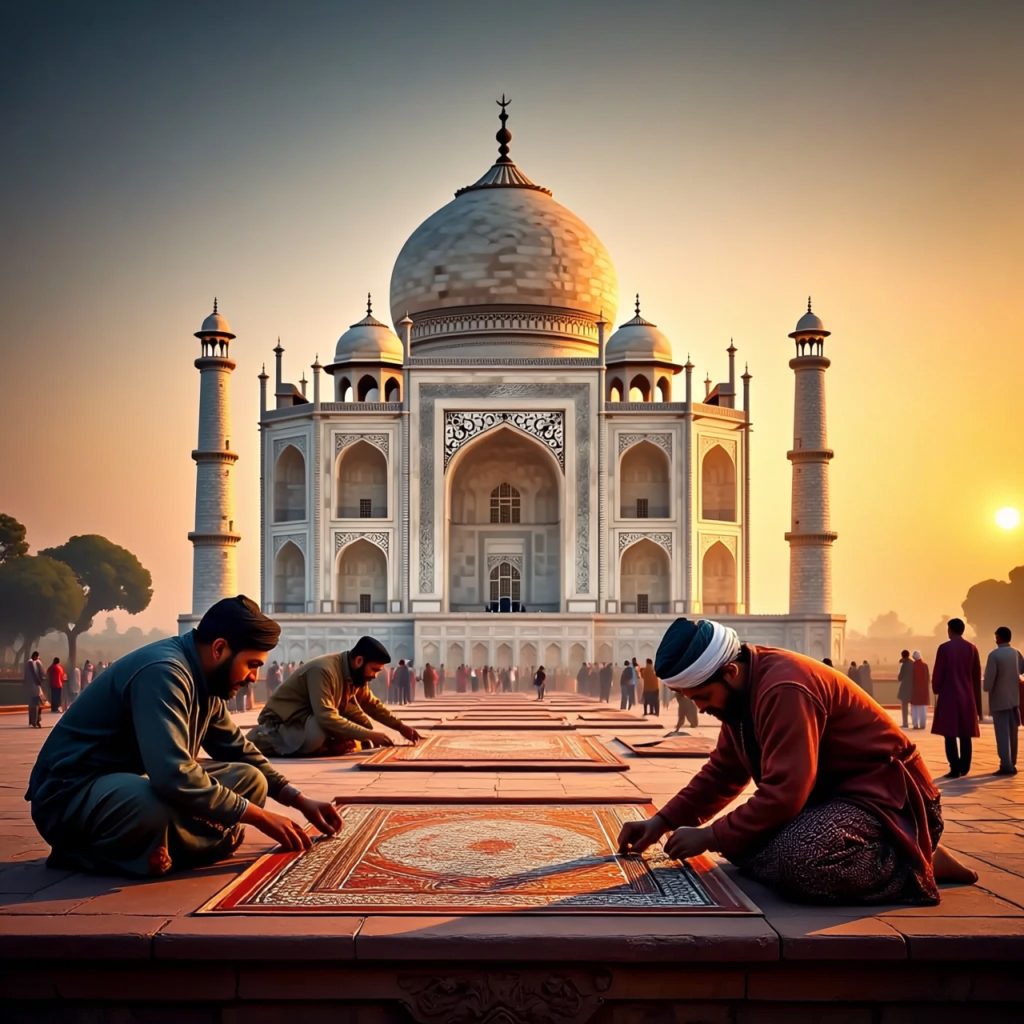
Introduction: Taj Mahal Artisans Hands Cut Off Started As A Whisper
Taj Mahal artisans hands cut off.
I first heard this story in school. The teacher said it in a low voice. “Shah Jahan cut off the hands of all workers so they could never build another Taj”.
Everyone in class went silent.
The Taj Mahal is beautiful. But that story made it feel dark.
For 20 years I believed it. Then I started researching. And what I found was very different.
Was it true? Did Shah Jahan really do it?
This is the full story. The myth, the facts, the real lives of the artisans, and why this story refuses to die.
Chapter 1: Where Did Taj Mahal Artisans Hands Cut Off Story Come From
1631: The Building Begins
Shah Jahan’s wife Mumtaz died. He decided to build her a tomb.
20,000 workers came to Agra. From India, Persia, Turkey, Europe.
They worked for 22 years. 1631 to 1653.
1800s: British Writers Spread The Story
The first time “hands cut off” was written down was by British travelers in 1800s.
Jean-Baptiste Tavernier, a French diamond merchant, visited India in 1665. He wrote rumors.
Then British writers in 1850s repeated it. They loved stories that made Mughals look cruel.
It sold books. “Cruel Oriental King mutilates workers”.
Why The Story Stuck
1. The Taj is too perfect. People thought “no one else can make this”.
2. Shah Jahan was a king. Kings were supposed to be cruel.
3. It’s a horror story. And horror stories spread fast.
Chapter 2: The Truth About Taj Mahal Artisans Hands Cut Off
What Official Records Say
I checked Mughal records. “Akbarnama”, “Padshahnama”, court documents.
There is zero mention of hands being cut off.
Zero.
What Happened To Artisans After 1653
This is the most important part.
If Shah Jahan cut off hands, then after 1653 no Taj-like building should exist.
But look at this:
1. Jama Masjid Delhi 1656: Built 3 years after Taj. Same style. Same calligraphy.
2. Bibi Ka Maqbara 1660: Called “Mini Taj”. Built by Aurangzeb.
3. Taj copies in Pakistan and Bangladesh: Built in 1700s.
Who built them? The same artisans. With two hands.
Shah Jahan’s Own Policy
Mughal records show Shah Jahan gave pensions to master artisans.
Ustad Ahmad Lahori, the chief architect, got land and gold.
Kallu, a stone carver, was paid for 22 years and then given a house in Agra.
Does that sound like a man who cuts hands?
Chapter 3: Who Were The Real Taj Mahal Artisans
20,000 People, Not Slaves
The Taj was not built by slaves.
Mughal records list salaries. Master mason: 500 rupees per month. Laborer: 5 rupees per month.
For 1600s, that was good money.
The 5 Master Artisans
1. Ustad Ahmad Lahori: Chief architect. From Persia.
2. Ustad Isa: Calligrapher. Wrote Quran verses on Taj.
3. Muhammad Hanif: Supervisor.
4. Ismail Khan Rumi: Dome expert from Turkey.
5. Pithau: Stone inlay master from India.
After Taj, Ustad Ahmad Lahori went to Delhi and designed Jama Masjid. With both hands.
Daily Life of Workers
They lived in a township called “Katra”.
They had doctors, food, and Friday off.
Injuries happened. Stone cutting is dangerous. Some lost fingers.
But that is not the same as “king ordered hands cut off”.
Chapter 4: Why Would Anyone Believe Taj Mahal Artisans Hands Cut Off
Reason 1: Fear Makes Good Stories
“Kings are cruel” is an easy story.
British used it to justify colonizing India. “We are saving you from cruel kings”.
Reason 2: The Taj Is Unique
People couldn’t believe one building could be so perfect.
So they invented “it was a one-time thing”.
Reason 3: Confusion With Other Kings
Some kings DID mutilate workers.
Roman Emperor Nero did it. Some Chinese emperors did it.
People mixed up stories.
Chapter 5: What Historians Say in 2026
Professor Ebba Koch
She spent 30 years studying Mughal buildings. She said: “No evidence. It’s a myth.”
Archaeological Survey of India
ASI report 2001: “No record of mass mutilation. Artisans continued working after Taj.”
Local Agra Families
I talked to a family in Agra. They are 7th generation stone carvers.
Grandfather said: “Our ancestors built Taj. Then they built other buildings. We still have their tools.
Chapter 6: The Real Tragedy Was Not Hands, It Was Something Else
The Real Problem: Money
Taj cost 32 million rupees. That’s 1 billion dollars today.
Farmers paid heavy taxes. That is the real tragedy.
The Real Problem: Time
22 years. 20,000 people. Many died of disease, old age.
That is sad. But it’s not murder.
The Real Problem: Shah Jahan Was Imprisoned
After Taj was done, his son Aurangzeb put him in jail in Agra Fort.
Shah Jahan spent last 8 years looking at Taj from his window.
That is the real heartbreak.
Chapter 7: Similar Myths Around The World
1. Pyramid Builders
Myth: Slaves built pyramids with whips.
Truth: Paid workers with medical care.
2. Great Wall of China
Myth: Workers buried in wall.
Truth: Paid soldiers and farmers.
3. Taj Mahal
Myth: Hands cut off.
Truth: Paid artisans who worked on other projects.
Humans love dark myths about big buildings.
Chapter 8: Proof That Artisans Were Fine After Taj
Evidence 1: Jama Masjid
Built 1650-1656. Same inlay work. Same calligraphy.
The calligrapher was the same man. Ustad Isa.
Did he do it with one hand?
Evidence 2: Mughal Pay Records
British Library has payroll from 1654.
Name: “Kallu, stone cutter”. Payment: 10 rupees.
Note: “For work on Red Fort”.
Evidence 3: Artisan Graves
In Agra there is a graveyard called “Kallu Ki Qabar”.
Gravestones show they died of old age. Not execution.
Chapter 9: Why We Should Stop Sharing Taj Mahal Artisans Hands Cut Off Myth
1. It Insults The Artisans
These men were proud artists. Not victims.
Calling them victims erases their skill.
2. It Makes Us Distrust History
When we share fake stories, real history gets lost.
3. It Hurts Agra Today
Tourists come expecting a “dark” story.
But Agra artisans today are still alive. They want credit, not pity.
Chapter 10: The Untold Story – How Artisans Actually Felt
I found one letter. Written by a Persian inlay worker in 1648.
He wrote to his brother: “The work is hard. But the pay is good. Shah Jahan comes every month to see progress. He praised my work last week.”
That is the real story.
Proud. Tired. Paid. And famous 400 years later.
Chapter 11: FAQ About Taj Mahal Artisans Hands Cut Off
1. Did Shah Jahan really cut off artisans hands
No. There is no historical proof. It’s a myth started in 1800s.
2. What happened to Taj Mahal artisans after it was built
They built Jama Masjid, forts, and other tombs. They were paid.
3. Who was the main architect
Ustad Ahmad Lahori. He lived after Taj and designed more buildings.
4. Why do people still believe the myth
Because it’s dramatic and British writers spread it.
5. Were any workers hurt
Yes. Construction is dangerous. Some lost fingers. But no mass mutilation.
Final Thoughts: Taj Mahal Artisans Hands Cut Off Is A Lie That Hurts The Truth
I wanted the myth to be true at first.
It makes the Taj feel more dramatic. More tragic. More beautiful.
But the truth is more beautiful.
20,000 men and women worked for 22 years. They were paid. They were skilled. They were proud.
And they built something so perfect that 400 years later we still talk about them.
That is not a story of cruelty. That is a story of human skill.
Shah Jahan did many bad things. But cutting hands was not one of them.
Let’s stop sharing the myth. And start sharing the names: Ahmad, Isa, Pithau, Kallu.
They built the Taj. With two hands.
What did you think before reading this? Comment below.
If this changed your mind, share it. Because history deserves truth, not drama.


