
Why Did The Battle Of Stalingrad Turn The Tide Of The War?
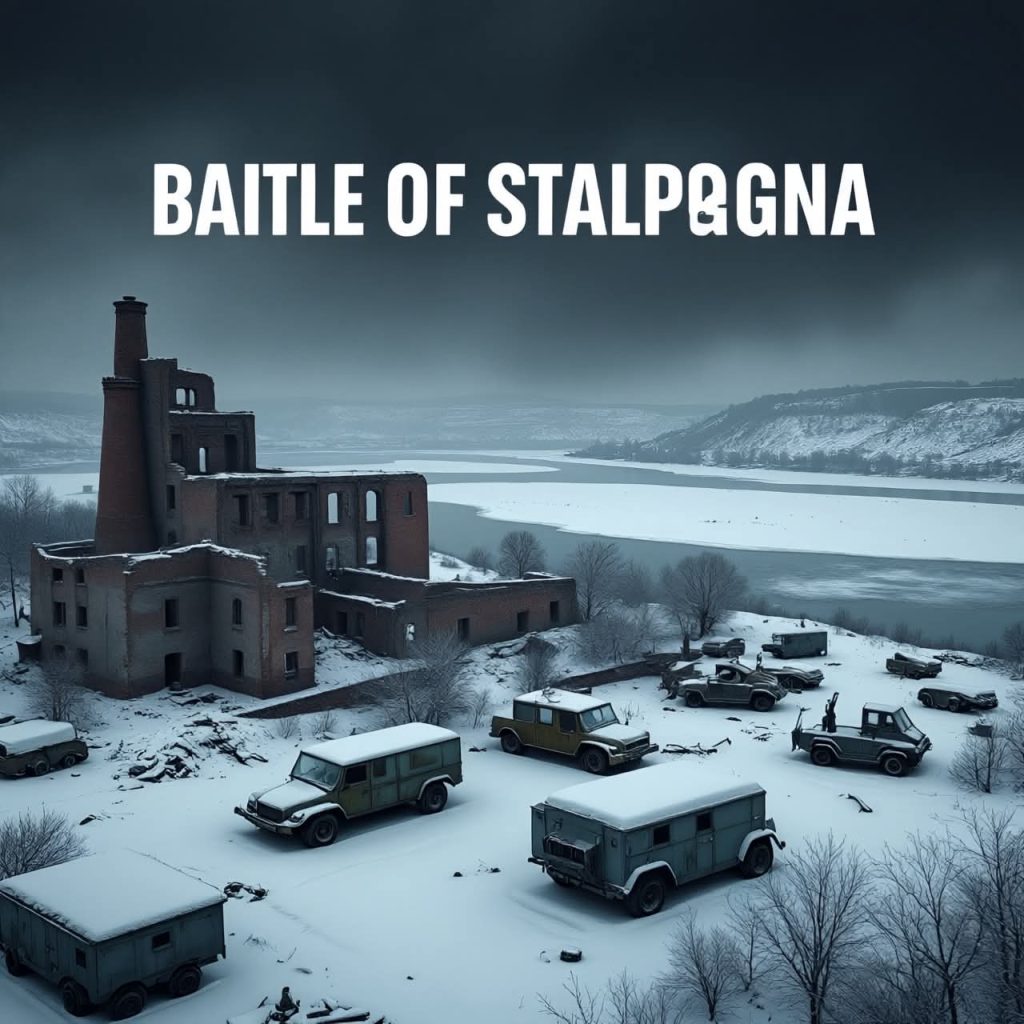
Battle Of Stalingrad: The Fight That Broke The German Army
Why did the Battle of Stalingrad turn the tide of the war?
Because for the first time in World War 2, Hitler lost an entire army.
And after that, Germany never won again.
August 1942. Summer.
February 1943. Winter.
5 months in between.
One city. One river. One million dead.
Stalingrad was not the biggest city. Not the richest city.
But Hitler wanted it because of the name. Stalin.
Stalin needed it because the Volga River ran through it.
This was house to house fighting. Room to room.
Soldiers fought with knives when bullets ran out.
This was where the German war machine stopped.
The Setup: Hitler’s Big Plan
1942. Germany still looked strong.
They beat France in 1940. They were deep inside Russia.
Operation Barbarossa failed to take Moscow, but Germany held huge land.
Hitler had a new plan for 1942.
Go south. Take the oil fields in Caucasus.
Without oil, Russian tanks and planes would stop.
But he also wanted Stalingrad.
The city was on the Volga River. It was a supply route.
If Germany took it, Russia would be cut in half.
General Friedrich Paulus led the 6th Army. 300,000 men.
Best soldiers Germany had.
Goering promised “The Luftwaffe will supply anything you need.”
They entered the city in September 1942.
German generals said “We will be done in one week.”
They were very wrong.
Hell On Earth: How The Battle Was Fought
This was not Blitzkrieg. No open fields. No fast tanks.
German bombers flattened the city in 24 hours.
90% of buildings destroyed.
But that helped Russia. Rubble is good for defense.
Russian soldiers hid in factories. In sewers. In basements.
A sniper named Vasily Zaitsev killed 225 Germans from one ruin.
The Germans called it Rattenkrieg. War of the Rats.
Every day Russians crossed the Volga River in boats.
German machine guns waited on the other side.
The water turned red. But more boats came.
Stalin gave Order 227. “Not one step back.”
Soldiers who retreated were shot by their own officers.
November came. Minus 30 degrees.
German soldiers wore paper in their boots.
They burned furniture to stay warm.
They had no food. Rats were food.
How The Battle Of Stalingrad Ended
November 19, 1942. The Russians attacked.
Not at Stalingrad. Around it.
Operation Uranus. Russian tanks went north and south of the city.
In 4 days they met and closed the circle.
300,000 German soldiers were trapped.
Hitler had a choice. Break out now or be supplied by air.
He chose to stay. Goering lied and said air supply was possible.
It was not.
For 2 months Germans waited.
Planes dropped 10% of what was needed.
Most crashed in snow.
January 1943. No bullets. No medicine. No bread.
February 2, 1943. Paulus surrendered.
91,000 German soldiers walked into captivity.
Only 5,000 ever returned to Germany.
This was the first time a German Field Marshal surrendered.
This was the first time an entire German army was destroyed.
This Is Why The War Turned Here
After Stalingrad, nothing was the same. 4 big changes happened.
1. Germany Lost The Attack
Before Stalingrad, Germany was always attacking. Poland, France, Russia.
After Stalingrad, Germany only defended.
1943 Kursk, 1944 Normandy, 1945 Berlin. All retreat.
When you lose 300,000 trained men, you cannot attack again.
2. The World Believed Hitler Could Beaten
Before Stalingrad, Germany never lost a big battle.
People in occupied countries lost hope.
After Stalingrad, radio in London, Washington, and Moscow said the same thing.
“Germany can be defeated.”
Morale in Germany collapsed.
Goebbels had to go on radio and ask “Do you want total war?”
Because people were scared.
3. Russia Got Stronger
Stalingrad gave Russia confidence.
Factory workers made tanks while bombs fell.
Women drove trucks to the front.
After Stalingrad, Russia pushed west.
Kursk 1943. Ukraine 1944. Poland 1945. Berlin 1945.
The road from Stalingrad to Berlin took 2 years.
4. Germany’s Allies Quit
Italy, Romania, Hungary fought with Germany at Stalingrad.
Their armies were destroyed too.
After 1943, Italy surrendered.
Romania and Hungary switched sides in 1944.
Germany was alone.
The Human Story Behind The Numbers
We talk about strategy. But people lived this.
A German soldier wrote in his diary in January 1943.
“We fight for ruins. We die for ruins.
And Hitler says we must not give up ruins.”
A Russian nurse worked 20 hours a day in a basement hospital.
No electricity. She operated by candle light.
Civilians lived in sewers for 5 months.
40,000 civilians died in the city.
When the Germans surrendered, Russians gave them bread.
Many cried. They had not seen bread in months.
What If Germany Won Stalingrad
Historians debate this a lot.
If Germany took the city, they would reach the oil fields.
Their tanks would have fuel.
Turkey might join the war. The Middle East would be open.
But most experts agree Germany still loses.
America was already in the war. Russia was too big.
The war would just last 2 more years.
But one thing is sure. Without Stalingrad, the war looks very different.
FAQ About The Battle Of Stalingrad
1. When was the Battle of Stalingrad?
The Battle of Stalingrad lasted from August 23, 1942 to February 2, 1943.
2. Who won the Battle of Stalingrad?
The Soviet Union won. The German 6th Army surrendered.
3. Why did the Battle of Stalingrad turn the tide of the war?
Because Germany lost 300,000 soldiers, lost the ability to attack, and the Allies gained confidence that Germany could be defeated.
4. How many people died in the Battle of Stalingrad?
About 1.1 million soldiers and 40,000 civilians died.
5. What is Stalingrad called now?
The city is now called Volgograd in Russia.
Read more:https://worldhistorytales.com/operation-barbarossa-hitler-largest-campaign/


