
Emperor Ashoka and the Kalinga War: From Chandashoka to Devanampriya
1. Introduction: emperor ashoka Was Not Born a Saint
When you hear the name emperor ashoka, you probably think of peace, Buddhism, and that wheel on the Indian flag.
But here’s the truth most people don’t tell you. He didn’t start that way.
In 261 BC, emperor ashoka ordered one of the bloodiest wars in Indian history. Over 100,000 people died. Rivers ran red.
And when he saw what he had done, he broke. He cried. He changed.
This is the story of how the most ruthless king in India became the most beloved king in India. This is the story of emperor ashoka and the Kalinga War.
2. The Boy Who Would Become emperor ashoka
He was born in 304 BC in Pataliputra. Today we call it Patna.
His grandfather was Chandragupta Maurya. The man who built an empire from nothing. His father was Bindusara. By the time he was born, the Mauryas ruled most of India.
As a kid he was sent to govern faraway places like Taxila and Ujjain. The old Buddhist books say he was smart. But he was also restless. He wanted more. He wanted to be in charge.
This was not the peaceful man we know. This was a prince with fire in his eyes.
3. The Bloody Path to the Throne
In 268 BC his father died. And like it always happens in royal families, the brothers started fighting.
According to Buddhist texts, he killed 99 of his brothers. Only one was spared. Historians today think 99 is too much. But there was blood. There was no doubt about that.
For the next 8 years he ruled like a typical ancient king. He expanded. He fought. He punished anyone who stood in his way.
People called him Chandashoka. That means Ashoka the Fierce.
If Kalinga had never happened, that’s how history would remember him.
4. The Last Kingdom That Stood in His Way
By 261 BC, almost all of India was his. From the mountains of Afghanistan to the Bay of Bengal.
But there was one place left. Kalinga.
Today it’s Odisha. Back then it was rich. It had ports. It traded with other countries. And the people were proud. They didn’t want to bow to anyone.
For him, Kalinga was the last piece of the puzzle. If he took it, his empire would be complete.
So he made up his mind. He would take Kalinga. No matter what it cost.
5. The Kalinga War: 261 BC
The war started and it was ugly.
He sent his full army. Elephants, horses, chariots, hundreds of thousands of soldiers.
The people of Kalinga fought back. For months they held on. But in the end, they couldn’t win.
When it was over, the numbers were horrifying. His own records say 100,000 people were killed. 150,000 were taken as prisoners.
The Daya River was said to be red with blood.
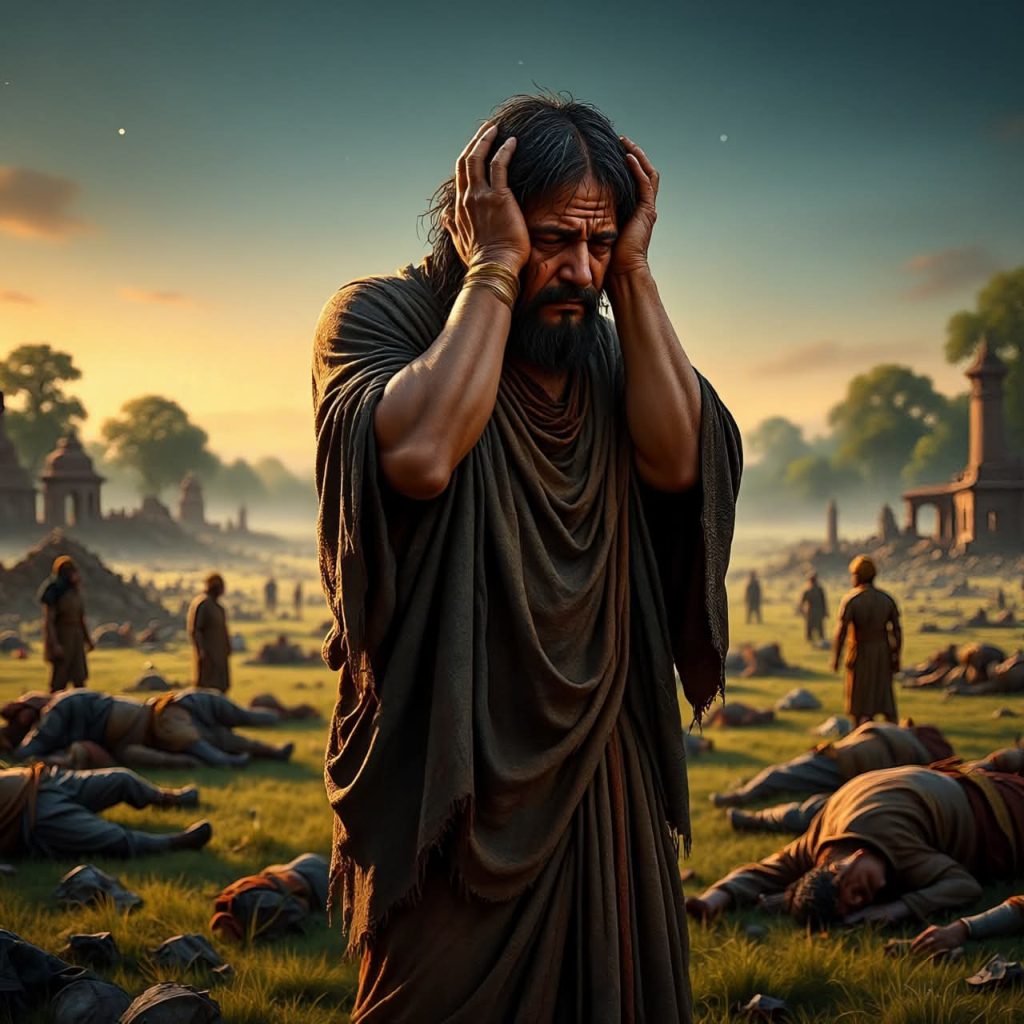
After the victory, he walked through the ruins. And what he saw changed him forever.
6. The Sight That Broke emperor ashoka
Imagine walking through a city after a war.
Burnt houses. Dead bodies. Women crying over their husbands. Children with no one left.
That’s what he saw in Kalinga.
Later he wrote about it on rocks. He said the war gave him great pain. He said he felt sorry for all the suffering.
No king did that. Kings bragged about wins. This king apologized for his.
That day, something inside him died. And something new was born.
7. How He Found Buddhism After the War
After Kalinga, he was empty. He had won, but he felt terrible.
That’s when he met Buddhist monks. One of them was named Upagupta.
The monk told him about Buddha. About how violence only leads to more violence. About how the real victory is over yourself.
He listened.
Around 260 BC, he became a Buddhist.
But he didn’t force his people to become Buddhists. He created something called Dhamma. It meant living right. Telling the truth. Being kind. Respecting everyone.
This was the new him.
8. Why He Called Himself Devanampriya
After Kalinga, he hated his old name.
Chandashoka. The Fierce.
He didn’t want to be that man anymore.
So he took a new name. Devanampriya.
It means Beloved of the Gods.
Think about that. The most powerful man in India didn’t want to be called conqueror. He wanted to be called beloved.
That tells you everything.
The Difference Between The Two Names
Chandashoka was about fear. Devanampriya was about love. And he chose love.
9. The Rock Messages He Left Behind
He did something no other king did.
He carved his thoughts on rocks and pillars. All over his empire.
We call them the Edicts today.
What He Wrote On Those Rocks
He wrote about Dhamma. He told his officers to be fair.
He said all religions are good.
He even wrote about Kalinga and said he regretted it.
You can still see these rocks today. In Delhi, in Bihar, in Odisha.
They are proof that he meant what he said.
10. What He Built With His Money
Before Kalinga, he spent money on soldiers.
After Kalinga, he spent money on people.
He built hospitals. For people and for animals.
He planted trees along roads so travelers had shade.
He built wells and rest houses.
He made sure no one went hungry during bad times.
No king in ancient times did this.
He believed a king’s job was to take care of his people.
11. How He Sent Buddhism to Other Countries
He didn’t keep Buddhism to himself.
He sent monks to Sri Lanka. His own son and daughter went.
He sent monks to Burma, Thailand, and Central Asia.
Because of him, Buddhism spread across Asia.
Without him, Buddhism might have died in India. But he gave it to the world.
The Mission to Sri Lanka
The most famous mission was to Sri Lanka. And it worked. Sri Lanka is still Buddhist today because of him.
12. Did He Become Weak After Kalinga
People always ask this.
“Did he become weak after he stopped fighting?”
No.
He still had the biggest army in Asia.
He still ruled a huge empire.
He still collected taxes.
He just chose not to use his army to attack.
It’s easy to fight when you’re strong. It’s hard to choose peace when you can win. That’s what he did.
13. The Last 30 Years of His Life
He ruled for 37 years. From 268 BC to 232 BC.
The last 29 years were peaceful.
He traveled. He met people. He built things.
He went to places where Buddha had walked.
He died in 232 BC. He was 72.
After he died, the empire slowly fell apart. His grandsons weren’t like him.
14. How We Lost Him and Found Him Again
For 1000 years, India forgot about him.
We remembered other kings. But not him.
Then in 1837, a British scholar named James Prinsep figured out how to read the writing on the pillars.
When they translated it, everyone was shocked.
An ancient king talking about peace? About saying sorry?
That’s how we found him again.
15. Why This Story Matters in 2026
Look at the world today.
Still wars. Still hate. Still leaders who think power means hurting people.
This story matters because it shows there’s another way.
The wheel on our flag? That’s his. The Ashoka Chakra.
Every time we see it, we should remember what he chose after Kalinga.
16. Final Word: What emperor ashoka Teaches Us
Here’s the truth.
He wasn’t born good.
He did terrible things.
He has blood on his hands.
But he changed.
And if he can change after killing 100,000 people, then anyone can change.
That’s why we still talk about him.
Not because he was perfect.
But because he tried to be better.
And in a world full of anger, we need that story.
Frequently Asked Questions
Who was the king in the Kalinga War
The king who fought the Kalinga War was the Mauryan ruler who later became famous for peace and Buddhism.
What happened in the Kalinga War
In 261 BC the Kalinga War happened and thousands died, which made the king give up violence forever.
Why is he called Devanampriya
After the war he called himself Devanampriya which means Beloved of the Gods to show his new path.
What are the rock edicts
The rock edicts are messages carved on stones where he talked about Dhamma and good rule.
Why do we remember him today
We remember him because he showed that even after mistakes, a person can choose to do better.


