
Indus Valley Civilization: The Marvel of Modern Drainage Systems From 4000 Years Ago
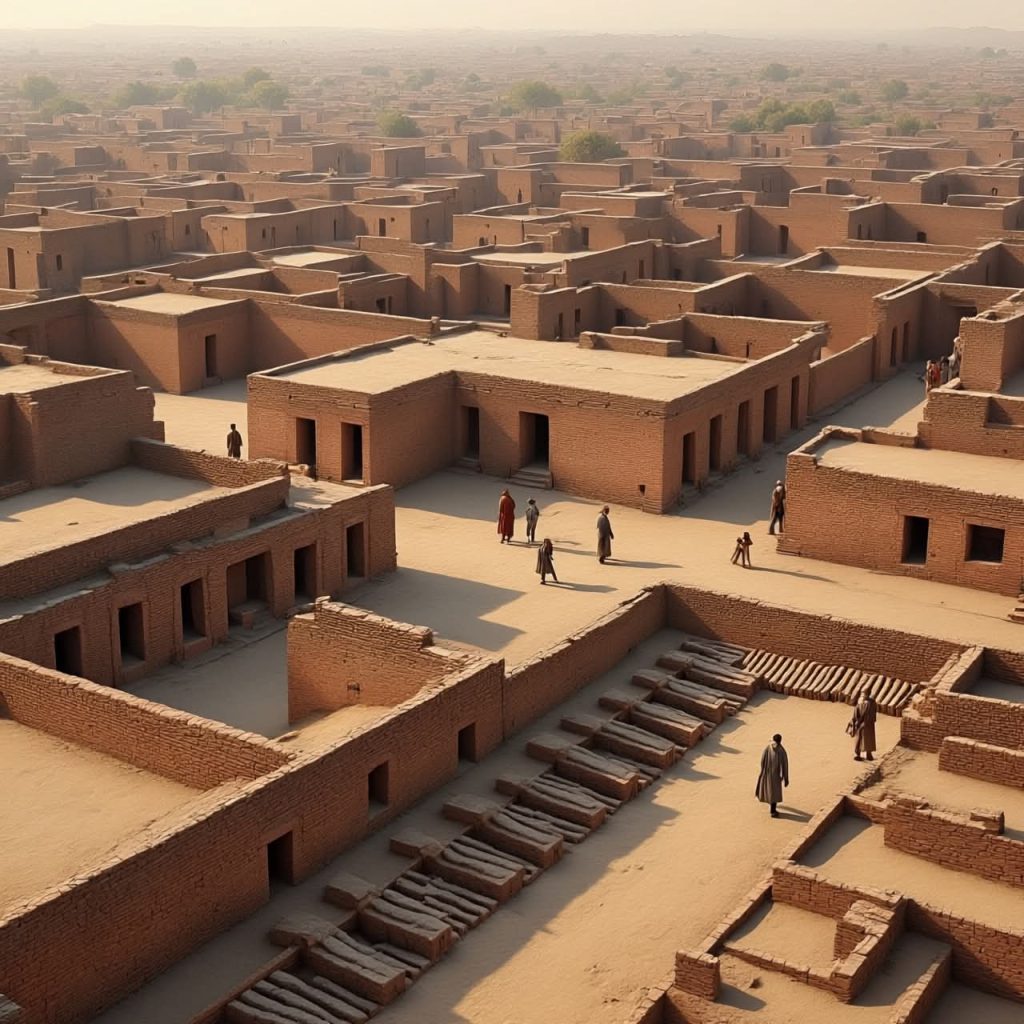
1. Introduction: indus valley civilization and The City That Felt Like Tomorrow
indus valley civilization.Let me ask you something.
Walk outside your house right now. What do you see? Garbage on the roadside? Open drains? Waterlogging when it rains?
Now imagine a city from 4,000 years ago.
The streets are straight like they were drawn with a ruler. Every house has a bathroom. And under the road, there is a covered brick drain that takes all the dirty water away. If it gets blocked, a worker can just lift a stone and clean it.
Sounds impossible for 2600 BCE, right?
But that is exactly what the Harappan Civilization did.
While the rest of the world was still figuring out farming, the people of the Harappan Civilization were living in cities that would make many modern towns jealous. They didn’t have kings or big armies. But they had something better. Clean water and clean streets.
And that is why we are still talking about them today.
Why You Shuld Care About This
Because we are still struggling with the same problems. Floods. Dirty water. Bad city planning. The Harappan Civilization already solved it. Let’s learn from them.
2. So Who Exactly Were The People of The indus valley civilization
First, let’s set the scene.
The Harappan Civilization started around 3300 BCE. It lasted for almost 2000 years. That’s longer than the United States has existed, multiplied by 8.
Where Was It
It was huge. Covering most of Pakistan today, Western India, and parts of Afghanistan.
If you put Egypt and Mesopotamia together, the Indus Valley culture was still 3 times bigger.
The big names you’ll hear are Harappa, Mohenjo-daro, Dholavira, and Lothal.
The Weirdest Part
You know what we never found? A palace.
We never found a king’s grave. We never found pictures of a king killing enemies.
It looks like the Indus Valley culture was run by regular people. Merchants. City elders. People who cared more about business and clean roads than crowns and swords.
That’s why this civilization feels so different.
3. How The indus valley civilization Planned Cities Like Architects
Most ancient cities just grew. People built houses wherever they wanted. Streets became crooked messes.
The Indus Valley culture said no to that.
They Drew The Map First
Before the first brick was laid, they planned the whole city.
Main roads went north to south. Side roads went east to west. Everything met at 90 degrees.
The main road was 30 feet wide. You could drive two trucks on it today.
This kind of planning didn’t show up again until Rome. And that was 2000 years later.
The Indus Valley culture was thinking way ahead.
4. Let Me Take You Inside Mohenjo-daro
Mohenjo-daro means Mound of the Dead. But when it was alive, it was buzzing.
A Normal House Back Then
Imagine you are a potter in the Ancient Harappan culture. You come home after work.
You walk into a courtyard. The house has two floors.
In the corner there’s a small room. That’s your bathroom. There’s a toilet seat made of brick. There’s a pipe.
You flush, and the waste goes through the wall and into a drain under the street.
You also have your own well in the courtyard. So you don’t fight with neighbors for water.
This wasn’t for the rich. This was normal. The Ancient Harappan culture gave this to everyone.
5. Okay But How Did They Build Such Smart Drains
This is where my jaw dropped when I first read about it.
The Brick Trick
The people of the Ancient Harappan culture used only one size of brick. Always. 1 by 2 by 4.
And they didn’t dry it in the sun. They fired it in a kiln. So rain couldn’t damage it.
The Drain Design
The main drain ran under the main street. It was 2 feet deep.
It was covered with big stone slabs.
From each house, a small pipe came out and joined the main drain at an angle. Smart. Because it stopped dirty water from flowing back into houses.
And every 30 feet, there was a big stone you could lift. That was a manhole. Workers would clean it.
The Ancient Harappan culture thought about the guy who would have to clean it 50 years later.
6. The Great Bath:Was It Just For Show
Right in the middle of Mohenjo-daro there’s this big pool.
39 feet long. 23 feet wide.
The walls are covered in tar to make it waterproof. There are stairs. There are rooms around it.
What Was It For
Most historians think the people of the Ancient Harappan culture used it for religious bathing. Like a holy place.
But forget the religion for a second. Just think about the effort.
To build this, you need to care a lot about cleanliness. The Bronze Age Indus Valley society did.
7. It Wasn’t Just One Lucky City indus valley civilization
Maybe Mohenjo-daro was a fluke, right? Nope.
Harappa
Same grid. Same drains. Same bricks.
Dholavira
This one is crazy. It’s in the desert. No river.
So the people of the Bronze Age Indus Valley society built 16 huge water tanks. They built dams to catch rain.
They had water and drains even in a desert.
That tells you something. The Bronze Age Indus Valley society had rules. And everyone followed them.
8. What About Drinking Water
Drains are great. But what if the water you drink is dirty?
The Bronze Age Indus Valley society thought of that too.
Wells Everywhere
We found 700 wells in Mohenjo-daro. That’s one for every 3 houses.
The bricks inside were cut special so the well wouldn’t collapse.
If you go there today, you can still see marks from the rope. People pulled water from there 4000 years ago.
Clean water was a right in the Harappan Civilization, not a luxury.
9. Why Were They So Obsessed With Clean indus valley civilization
Two reasons make sense.
Reason One: Floods
The Indus river flooded every year. The people of the Harappan Civilization built cities on raised ground. And they made drains to push water out fast.
Reason Two: They Got It
They didn’t know about germs. But they knew dirty streets make people sick.
So they kept things clean. The Harappan Civilization probably saved thousands of lives just with good drains.
10. How Could They Afford All This
Building cities costs money. Lots of it.
They Were Rich Traders
The people of the Harappan Civilization sold cotton clothes and beads to Mesopotamia.
Mesopotamian tablets talk about them. They called them Meluhha.
They had money. But instead of building gold statues, the indus valley civilization spent it on roads and drains.
And that’s why their cities lasted 1000 years.
11. Then Why Did The indus valley civilization Disappear
Around 1900 BCE, people started leaving.
What Went Wrong
We’re not 100% sure. But 3 things probably happened.
First, the weather changed. Rain stopped. Rivers dried.
Second, big floods came and wrecked the cities.
Third, trade with other countries stopped.
The indus valley civilization didn’t fall to an invasion. People just packed up and moved to villages.
12. How Did We Even Find Them Again
For 3000 years, no one remembered the Harappans.
The Railway Story
In 1850, British workers were building a railway. They needed bricks. They found a big mound and took the bricks.
Underneath was Harappa. The first city of the indus valley civilization.
The Big Dig
In 1920, archaeologists dug Mohenjo-daro. They expected huts. They found a city.
The world was shocked. The indus valley civilization was real, and it was old.
13. Let’s Be Honest. indus valley civilization vs Rome vs London
| | indus valley civilization | Rome | London 1850 |
| — | — | — | — |
| Covered drains in every street | Yes | No | No |
| Bathroom in every house | Yes | Only rich | No |
| City planned on a grid | Yes | Sort of | No |
The indus valley civilization wins. By a lot. And they did it 4000 years ago.
14. What Can We Learn From The indus valley civilization Today
Look at any big city in monsoon. Water everywhere.
The Harappans didn’t have that problem.
Lesson 1: Plan First
The indus valley civilization drew the map, then built.
Lesson 2: Keep Water Separate
Drinking water and waste water never mixed.
Lesson 3: Keep It Simple
All bricks same size. All drains same. Easy to fix.
Lesson 4: Spend on People
The indus valley civilization spent on drains, not palaces.
Lesson 5: Make It Easy to Clean
Manholes. The indus valley civilization invented them.
They built the world’s first smart city.
15. Clearing Up Some Wrong Ideas About The indus valley civilization
Myth: Only rich people had bathrooms
Nope. Even small houses had them in the Ancient Harappan culture.
Myth: Aliens built it
Bhai, it was humans. With bricks and math.
Myth: It was all religious
The Great Bath was religious. But the street drains? That was just common sense. The people of the indus valley civilization hated dirty streets.
16. Final Thoughts: The indus valley civilization and The Lesson We Forgot
So what’s the big deal about the indus valley civilization?
It wasn’t gold. It wasn’t conquest.
It was the idea that every person deserves to live in a clean city.
4,000 years ago, the Ancient Harappan culture made that happen.
They didn’t write poems about kings. They built drains for farmers.
Think About It
The Harappans are gone. But every time you see a manhole, that’s them.
Every time you flush, that’s them.
The Ancient Harappan culture is telling us something from 4000 years ago. Great cities aren’t built by kings. They’re built by clean water.
Frequently Asked Questions indus valley civilization
What was the indus valley civilization known for
The Ancient Harappan culture is known for planned cities and advanced drainage systems.
How old is the indus valley civilization
The indus valley civilization is about 4500 years old.
Which city of indus valley civilization had the best drainage
Mohenjo-daro had the best drainage in the indus valley civilization.
Why did the indus valley civilization end
Most likely climate change and rivers drying up.
Was Harappan Civilization better than Rome
Yes. The indus valley civilization had better sanitation 2000 years before Rome.


