
The 13 Most Terrifying Days of The Cold War: When The World Came Perilously Close To Nuclear War!
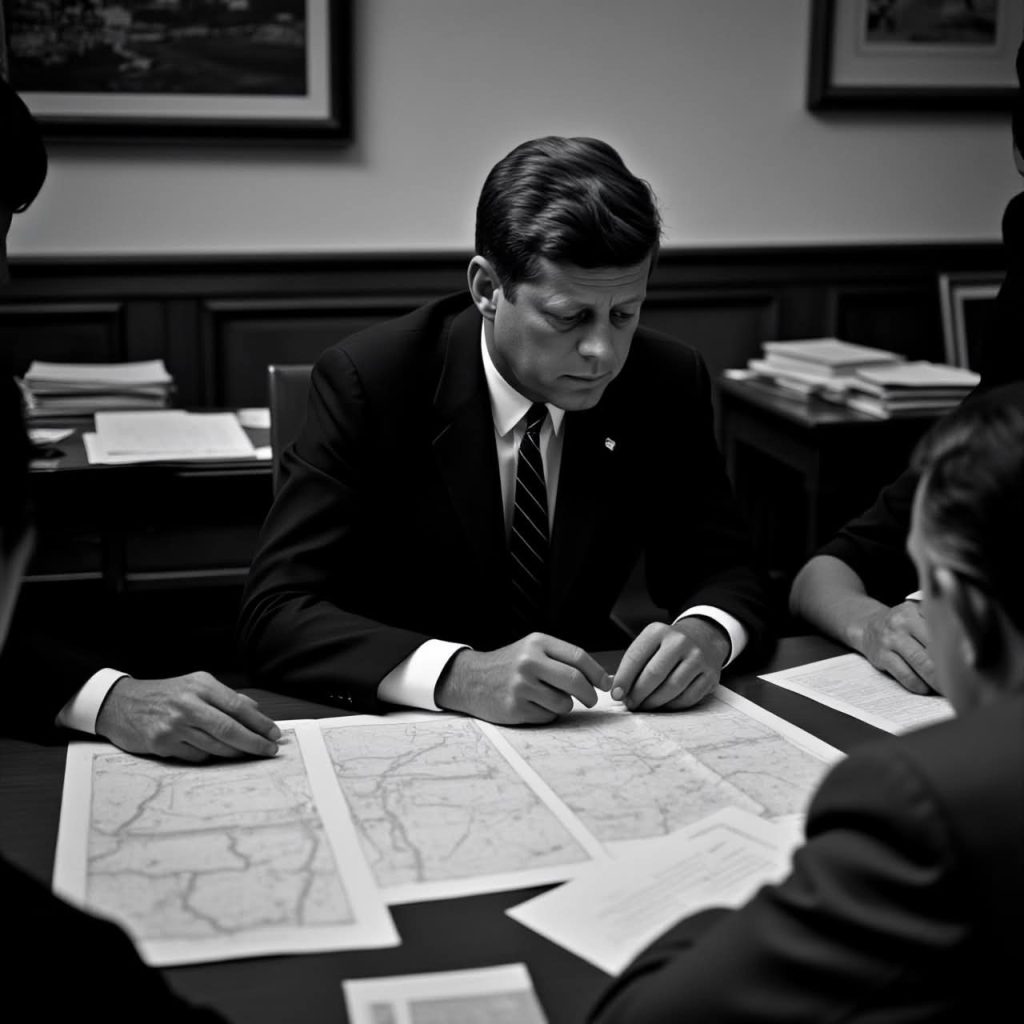
1. Introduction: The cold war nuclear crisis That Almost Ended Everything
October 1962. For 13 days the entire planet held its breath during the most dangerous cold war nuclear crisis in human history.
Schools were doing bomb drills. Families were building fallout shelters. And in Washington and Moscow, two men had their fingers hovering over buttons that could end human civilization in 30 minutes.
This was the Cold War nuclear standoff. The Cuban Missile Crisis.
Historians now call it the closest we have ever come to nuclear war. For 13 days in October 1962, the world was 1 mistake away from total destruction.
2. Background: How Tension Built Up To A cold war nuclear crisis
To understand the terror of those 13 days, you need to know the 15 years before it.
The US and USSR were allies against Hitler. Then they became enemies overnight.
By 1962 both sides had thousands of nukes. ICBMs could hit any city in 30 minutes.
But the real problem was Cuba. 90 miles from Florida. And that’s where Soviet missiles showed up and triggered the Cold War nuclear standoff.
3. Day 1: October 14, 1962 – U2 Photos Start The cold war nuclear crisis
The cold war nuclear crisis started with a single photo from 70,000 feet.
Major Richard Heyser flew a U2 over Cuba. The photos came back to Washington.
Analysts looked at them and froze. There were Soviet SS-4 missiles in Cuba. Medium range. They could hit Washington DC in 10 minutes.
President Kennedy was shown the photos on October 16. He didn’t tell the public yet. The Cold War nuclear threat had begun in complete secret.
4. Day 2-3: October 15-16, 1962 – EXCOMM Debates The cold war nuclear crisis
JFK gathered 14 of his top advisors in the White House. They called it EXCOMM.
The Four Terrible Options
Option 1: Do nothing and let missiles stay.
Option 2: Diplomatic pressure.
Option 3: Air strike.
Option 4: Full invasion of Cuba.
For 2 days they argued. The generals wanted to bomb. The diplomats wanted to talk.
JFK knew one thing: if he bombed, the USSR might bomb Berlin. If he did nothing, nukes would be 90 miles from Miami.
5. Day 4: October 17, 1962 – More Missiles Found During The cold war nuclear crisis
The U2 flew again. This time they found something worse.
Not just SS-4s. Now SS-5s too. Intermediate range. They could hit all of the US.
And Soviet ships were heading to Cuba with more missiles and warheads.
The cold war nuclear crisis was escalating fast and the American public still knew nothing.
6. Day 5: October 18, 1962 – Lies and Deception in The cold war nuclear crisis
Ambassador Dobrynin came to the White House. He looked JFK in the eye and lied.
“There Are No Offensive Missiles” – that’s what he told JFK and Secretary of State Rusk.
JFK now knew he was being lied to by the Soviets. The tension inside the White House was insane. Advisors were smoking 3 packs a day.
The Cold War nuclear threat was no longer theoretical. It was real.
Cuban Missile Crisis Explained
7. Day 6: October 19, 1962 – The Quarantine Decision in The cold war nuclear crisis
JFK made the call at 2am. Not invasion. Not bombing.
The Naval Quarantine Plan
He would blockade Cuba. Stop Soviet ships. Give Khrushchev time to back down without losing face.
The speech was written. But if one Soviet ship tried to run the blockade, the US Navy would fire. And that could mean war in hours.
This was the most dangerous decision of the Cold War nuclear confrontation.
8. Day 7: October 20, 1962 – America Learns About The cold war nuclear crisis
JFK recorded the TV speech. It would air October 22 at 7pm.
“Armed forces have been increased… we will not permit offensive weapons in Cuba.”
The American people found out. Gas stations had lines. People bought canned food and water.
Schools started duck-and-cover drills again. The Cold War nuclear confrontation was now public and everyone was scared.
9. Day 8: October 21, 1962 – Khrushchev Responds To The cold war nuclear crisis
The first letter from Moscow arrived. It was 12 pages long and furious.
“You Are Acting Like Pirates” – Khrushchev said the quarantine was illegal. He said the US had missiles in Turkey aimed at USSR.
The US had to decide: ignore it, or respond carefully. Every single word was weighed. One wrong word could start war.
10. Day 9: October 22, 1962 – DEFCON 3 During The cold war nuclear crisis
The speech aired. 100 million Americans watched.
Military On Highest Alert
B-52s with live nukes were put in the air 24/7. ICBMs were fueled.
DEFCON 3. The military was ready to go to war in minutes.
In Cuba, Soviet soldiers were building missile sites faster with floodlights at night. The Nuclear standoff between superpowers had reached its peak.
11. Day 10: October 23-24, 1962 – Ships and The cold war nuclear crisis Line
This was the scariest 24 hours.
25 Soviet ships were heading to the quarantine line. US Navy destroyers were waiting with guns ready.
If one ship refused to stop, the US would fire. If the US fired, USSR might fire nukes.
For 24 hours the world waited. Would they stop? At the last minute, the Soviet ships turned around.
We came that close during the Nuclear standoff between superpowers.
12. Day 11: October 25, 1962 – U2 Shot Down in The Cold War nuclear standoff
A U2 spy plane was shot down over Cuba. Pilot Major Rudolf Anderson died instantly.
The generals told JFK: “Mr President, we have to bomb the SAM sites now.”
JFK said no. He didn’t want to escalate.
But the Cold War nuclear standoff almost ended right there. One dead pilot. One decision from total war.
13. Day 12: October 26, 1962 – Two Letters During The cold war nuclear crisis
Moscow sent 2 letters on the same day. They contradicted each other and confused everyone.
Letter 1: “Remove missiles, we’ll remove them from Cuba.”
Letter 2: “Remove missiles from Turkey and we’ll remove ours from Cuba.”
Which one to answer? JFK’s team picked Letter 1 and ignored Letter 2 through a backchannel.
This secret deal saved the world during the Cold War nuclear standoff.
14. Day 13: October 27-28, 1962 – The End of The Cold War nuclear confrontation
October 27 is called “Black Saturday”. The worst day.
3 Things That Almost Started WW3
1. U2 shot down over Cuba.
2. US submarine almost used nuclear torpedo.
3. Soviet officer Vasili Arkhipov said “no” and refused to launch.
And JFK secretly agreed to remove US missiles from Turkey in 6 months.
On October 28, Khrushchev announced on Radio Moscow: “We will remove missiles from Cuba.”
The Cold War nuclear confrontation was over.
15. Lessons From The cold war nuclear crisis: Why We Survived
We got lucky. But also 3 things saved humanity.
1. Secret Backchannels
JFK and Khrushchev had private letters. They didn’t have to posture in public.
2. People Who Said No
Vasili Arkhipov refused to launch a nuke from a submarine. One man saved the world.
3. Buying Time
The quarantine gave both sides 1 week to think. Invasion would have started war in 1 hour.
The Cold War nuclear confrontation teaches us that diplomacy matters more than weapons.
16. Final Thoughts: Remembering The cold war nuclear crisis
So what were the 13 most terrifying days?
October 14 to October 28, 1962.
13 days where the US and USSR had 10,000 nuclear weapons aimed at each other. 13 days where 1 mistake, 1 misread radar, 1 angry general could have ended everything.
The Lesson of The cold war nuclear crisis
Nuclear war is not won. It is survived. Or not survived.
We are still living in that world today. The missiles are still there.
The story of the Cold War nuclear confrontation is a reminder: we have to be careful. Because next time we might not be so lucky.
Frequently Asked Questions
What was the cold war nuclear crisis?
The 13-day confrontation between US and USSR in October 1962 over Soviet missiles in Cuba.
How close were we to nuclear war?
Declassified documents show we were hours away multiple times during the Cold War nuclear confrontation.
Who was president during the cold war nuclear crisis?
John F Kennedy for the US and Nikita Khrushchev for the USSR.
What ended the Cold War nuclear confrontation?
USSR agreed to remove missiles from Cuba. US secretly agreed to remove missiles from Turkey later.
Could a cold war nuclear crisis happen again today?
Yes. Nuclear weapons still exist and miscalculation is still the biggest risk.


