
The Tragedy of Pompeii: A City Buried Alive Under Volcanic Ash
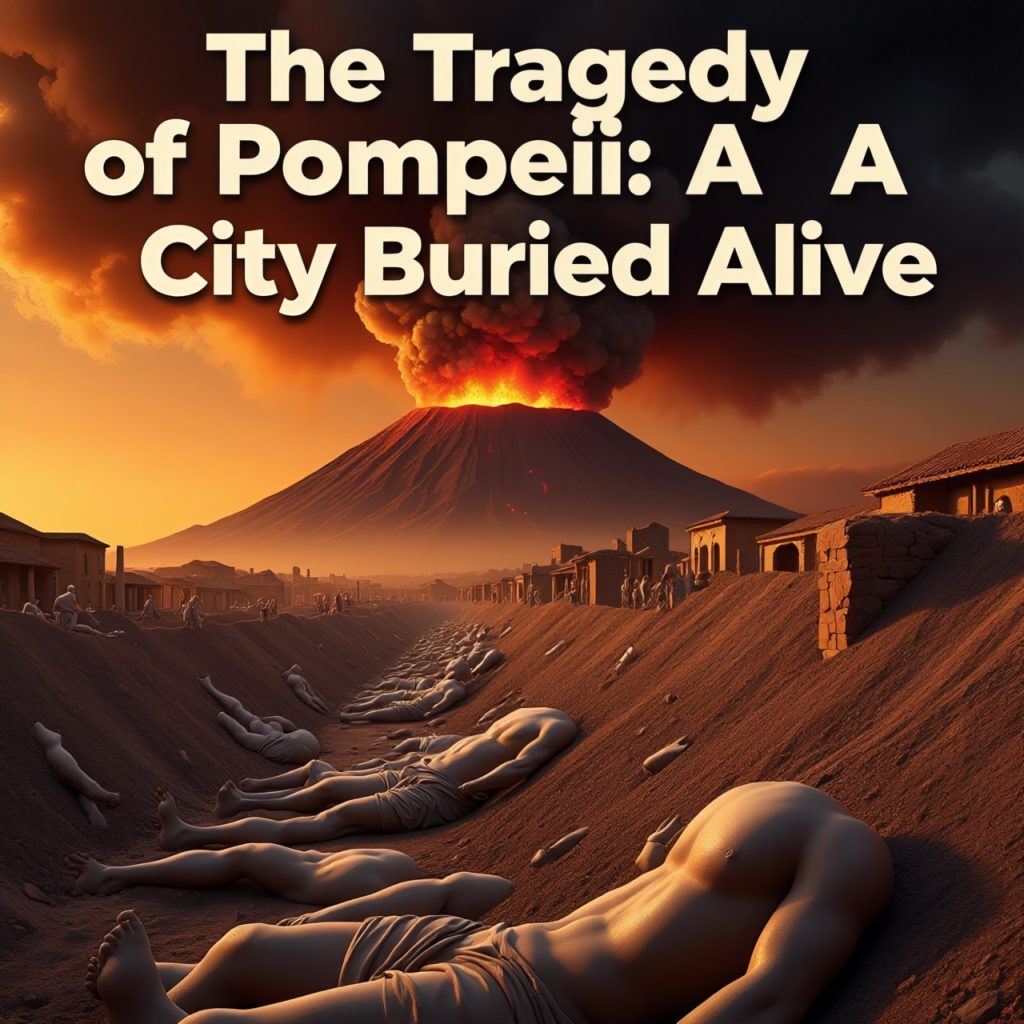
Introduction: The Tragedy of Pompeii That Froze a City in Time
The Tragedy of Pompeii didn’t feel like a tragedy at first.
It was a Tuesday morning. August 24, 79 AD.
The sun was up. The air smelled like bread and the sea.
In Pompeii, a baker named Terentius was yelling at his assistant for burning the loaves. Again.
Two streets over, kids were playing dice in the dirt. A woman was hanging laundry on her balcony.
In the amphitheater, gladiators were practicing for the big games that weekend.
Life was loud. Life was normal.
Then, around 1 PM, the mountain started to growl.
By the next morning, Pompeii was gone.
20 feet of ash and rock. 16,000 people. Gone in less than 24 hours.
Mount Vesuvius didn’t just destroy the city. It sealed it. Like a time capsule.
That’s why The Tragedy of Pompeii still hurts 2000 years later.
Because when we dig it up, we don’t just find stones. We find people. Mid-sentence. Mid-meal. Mid-life.
Why This Story Still Matters The Tragedy of Pompeii
Because we’ve all seen disaster on the news. But Pompeii lets you walk through it. You can see the fear. You can see the last footprints.
1. The Tragedy of Pompeii Before the End: A City That Had Everything
If you visited Pompeii in 79 AD, you’d think you died and went to Roman heaven.
It Was the Place to Be
Pompeii sat right on the Bay of Naples. About 16,000 people called it home.
But it wasn’t just locals. Rich Romans from Rome had vacation villas here.
Why? The weather was perfect. The wine was cheap. The views were insane.
There were 10 public baths. 120 bars. A forum for politics. Temples for the gods.
And the amphitheater? It held 20,000 people. Bigger than most modern stadiums.
The Warning Signs Were There
For a week before the eruption, the ground wouldn’t stop shaking.
Wells dried up. Chickens stopped laying eggs. Dogs howled at night.
But here’s the thing: Vesuvius hadn’t erupted in 700 years.
To them, it was just a mountain. A pretty one.
So they ignored it.
2. 1 PM, August 24: The Mountain Explodes
Nobody saw it coming. Not really.
The Pine Tree in the Sky
Pliny the Younger was a 17-year-old kid staying 17 miles away in Misenum.
Years later he wrote letters about it.
He said a cloud rose up. “It looked like a pine tree.”
20 miles high. White at the bottom, black and angry at the top.
That was the first sign. The mountain had blown its top off.
Then the Rocks Started Falling
But not lava. Pumice.
Light, foamy rocks. Like nature’s popcorn.
For 6 hours it fell. Non-stop.
It piled up on roofs. 3 feet. 4 feet.
Houses started collapsing.
People ran outside with blankets and pillows on their heads.
Most thought: “This is bad. But it will pass.”
3.The Tragedy of Pompeii Night Everything Ended
This is where The Tragedy of Pompeii gets dark.
7 PM: The Gas Clouds
The mountain couldn’t hold itself up anymore. Part of it collapsed.
And what came down was worse than fire.
Scientists call them pyroclastic surges.
I call them death clouds.
Super-hot gas. 1000 degrees. Ash. Moving faster than a jet plane.
If you were in its path, you didn’t burn. You were flash-cooked.
Your lungs turned to steam in one second.
All Night Long
The ash kept falling. 9 feet of it.
It filled bedrooms. It filled streets. It filled mouths.
By dawn, Pompeii wasn’t a city anymore.
It was a hill.
4. The Tragedy of Pompeii: Caught in the Last Second
This is why we can’t forget Pompeii.
We Found Ghosts
In the 1860s, a guy named Giuseppe Fiorelli was digging.
He kept hitting empty spaces in the ash. Spaces shaped like humans.
So he tried something crazy. He poured plaster in.
When it dried, he chipped away the ash.
And there they were.
A woman clutching jewelry.
A man curled up, covering his mouth.
A dog, still on its chain, twisting to get free.
They aren’t skeletons. They’re casts. The exact shape of the last moment.
You Can See Everything
The wrinkles in their clothes. The rings on their fingers.
One guy was holding coins. He was trying to run with his money.
Another was lying in bed. He probably died in his sleep.
5. What the Ash Saved: A Roman City, Perfectly Preserved
Because it was buried so fast, Pompeii didn’t rot. It was pickled.
The Bakery
We found one with 81 loaves of bread still in the oven.
Carbonized. Black. But you can still see the baker’s stamp on them.
The Bars
Romans had fast food. They called them thermopolia.
Counters with big jars sunk into them.
One menu is still on the wall: “Wine: 1 As. Good wine: 2 As. Falernian: 4 As.”
The Walls Talk
This is what gets me. The graffiti.
“Marcus loves Speratus.”
“I’m tired of my job.”
“Restitutus did this with his girlfriend.”
They were just people. Messy, funny, annoyed people. Just like us.
6. Why Did Vesuvius Do This?
Mountains don’t get angry. But they do build pressure.
700 Years of Waiting
Under Vesuvius, magma had been sitting. Heating. Pressing.
For 700 years.
The earthquakes that week? That was the mountain cracking open.
It Wasn’t Alone
Vesuvius also killed Herculaneum, Stabiae, and Oplontis.
4 towns, gone.
But Pompeii was the biggest. So that’s the name we remember.
7. Rome Lost Money That Day
Emperors care about money. And Pompeii made a lot of it.
Wine and Fish Sauce
Pompeii was famous for two things: wine and garum.
Garum was fish sauce. Romans put it on everything.
It was shipped all over the empire.
When Pompeii vanished, the supply chain broke.
The Emperor Tried
Emperor Titus sent money and food.
But you can’t dig out a city.
After a few years, Rome just… moved on.
And Pompeii was forgotten.
8. 1700 Years Later: We Dug It Up
For 17 centuries, Pompeii was just a rumor.
Found by a Farmer
In 1748, a farmer was digging and hit a wall.
King Charles of Naples said, “Dig more.”
They found statues. Then streets. Then houses.
It was like opening a tomb.
It Invented Archaeology
Before Pompeii, nobody cared about digging up old stuff.
After Pompeii, everyone did.
Because for the first time, we could see how regular people lived. Not kings. Not gods. People.
9. A Walk Through The Tragedy of Pompeii : 24 Hours Before
Close your eyes. Let’s go there.
Morning: The Forum
It’s loud. Vendors shouting. Politicians lying.
Kids chasing each other around the temple columns.
The smell of bread and fish is everywhere.
Afternoon: The Baths
Everyone goes to the baths. It’s social media, but wet.
Hot room to sweat. Cold room to shock.
Then you go drink wine with your friends.
Night: The Games
20,000 people in the amphitheater.
Screaming. Betting. Watching gladiators.
It was their Netflix and football game, all in one.
24 hours later, all of this was silence.
10. How People Actually Died
It wasn’t pretty. And it wasn’t quick for everyone.
The First Wave
Pumice. Roofs caved in. People got crushed.
The Second Wave
The gas. If you were outside, you dropped.
Archaeologists can tell by the way the bodies are positioned. No struggle. Just… done.
The Third Wave
Ash. It filled everything.
People hiding in cellars suffocated.
Families got separated in the dark and never found each other.
11. Herculaneum: The Sister City
Everyone forgets Herculaneum. But it was worse.
Closer to the Mountain
Only 4 miles away.
The first gas cloud hit it. Everyone died instantly. No warning.
Better Stuff Survived
Because it was buried in hot mud, wood didn’t rot.
We found wooden beds. Wooden doors.
And 1,800 scrolls. We’re using lasers to read them now.
12. The Art That Lived
The ash was the best art preserver ever.
Paintings on Walls
Rich people painted their walls.
Scenes of gods, gardens, and food.
The colors are still bright because the sun never touched them.
Mosaics on Floors
Tiny tiles making pictures.
My favorite: a dog with “Cave Canem” under it.
“Beware of Dog.” 2000 years old, and still funny.
13. What Pompeii Taught Scientists
We learned a lot from death.
About Volcanoes
Before Pompeii, we didn’t really get pyroclastic flows.
Now we do. And we have evacuation plans because of it.
About Romans
We know what they ate. What diseases they had. How tall they were.
Average height: 5’5″.
They had arthritis and bad teeth.
They were human.
14. Buried for 1700 Years
Think about that.
From 79 AD to 1748 AD.
Generations lived and died on top of Pompeii.
Farming. Building houses.
With a whole city 20 feet under their feet.
15. Pompeii vs Today
Could this happen again? Yes.
Mount St. Helens, 1980
Same thing. Exploded in minutes. Buried everything.
The Difference
We have warning systems now. Seismographs. Evacuation routes.
In 79 AD, they had rumors and prayers.
16. Final Thoughts: Why The Tragedy of Pompeii Breaks Us
The Tragedy of Pompeii isn’t about a volcano.
It’s about us.
We See Ourselves
We see a baker worried about bread.
We see lovers writing on walls.
We see a parent trying to protect a child.
2000 years, and nothing has changed.
The Ash Gave and Took
It took 16,000 lives.
But it gave us a gift: a city that never aged.
Pompeii was buried in an instant.
And because of that instant, it will live forever.
Walk through it and you’ll understand.
History isn’t dates. History is people.
Frequenly Asked Questions About The Tragedy of Pompeii
1. What was The Tragedy of Pompeii?
The Tragedy of Pompeii was the eruption of Mount Vesuvius on August 24, 79 AD. The volcano buried the Roman city under ash and killed an estimated 16,000 people in under 24 hours.
2. How many people died?
About 16,000 lived in Pompeii. We’ve found around 2,000 casts and bodies. Many more likely died in the bay or in areas we haven’t dug up yet.
3. Why are there body casts in Pompeii?
When people died, their bodies rotted and left a hollow space in the ash. Archaeologist Giuseppe Fiorelli poured plaster into these spaces in the 1860s. The result is a perfect mold of the person.
4. Can I visit Pompeii?
Yes. It’s in Italy, near Naples. It’s open every day and is a UNESCO World Heritage Site. Go to pompeiisites.org for tickets.
5. What caused Vesuvius to erupt?
Magma built up for 700 years. The earthquakes that week were the pressure breaking through. On August 24, the mountain exploded.
6. Did anyone survive?
Some did. Pliny the Younger escaped by boat. But anyone who stayed in Pompeii died.
7. What did people in Pompeii eat?
A lot of bread, olives, fish, and wine. They also ate garum, a fermented fish sauce. We found bakeries and bars with food still inside.
8. How long was Pompeii buried?
1700 years. From 79 AD until 1748 when it was rediscovered.
9. What’s the difference between Pompeii and Herculaneum?
Pompeii was hit with ash over hours. Herculaneum was hit instantly by a super-hot gas cloud. Herculaneum is smaller but has better preserved wood and scrolls.
10. Why is Pompeii so important?
Because it’s the best look we have at Roman daily life. It’s not from books. It’s from their homes, their bars, and their walls. Pompeii makes history real.


